Pakistan has formally raised the alarm over the volatile security situation in the Middle East following a second consecutive night of United States military airstrikes and retaliatory Iranian counter-attacks.
Positioning Islamabad as a vital backend diplomatic bridge, Pakistan’s Ministry of Foreign Affairs issued an urgent directive to all warring parties to pull back from the brink of a wider regional war.
1. The Flashing Red Line: US-Iran Escalation
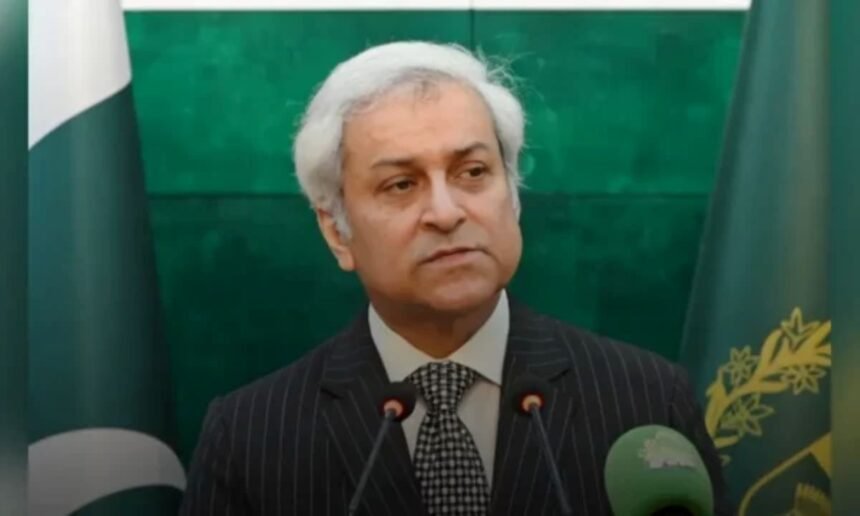
The diplomatic intervention comes immediately after intense kinetic exchanges between US forces and Iranian-backed assets in the region. Pakistan’s Foreign Ministry Spokesperson, Tahir Andrabi, confirmed that Islamabad is “deeply concerned” that the fragile regional stability is entirely unraveling.
Pakistan's Dual-Front Diplomatic Surge
         ┌─────────────────────────────────────────────────────────┐
         ▼                                                         ▼
[ The Iranian Front (Tehran) ]                            [ The Levant Front (Beirut Accord) ]
• Interior Minister Mohsin Naqvi holds high-level talks  • Robust advocacy forces Israel-Lebanon truce renewal
• Focus: Resuscitating the broken April ceasefire         • Lebanese Army Chief Gen. Haykal visits Islamabad
         │                                                         │
         └────────────────────────────┬────────────────────────────┘
                                      ▼
             [ Regional Goal: Halt Hostilities & Re-Open Dialog ]
In a direct message to both Washington and Tehran, Andrabi implored all combatants to honor previous backchannel agreements:
“We call upon all parties to adhere to the understanding reached regarding the ceasefire and to immediately halt hostilities. This is crucial to expand the space for meaningful dialogue and diplomacy.”
2. Shuttling Between Tehran and Islamabad
Pakistan’s mediation has translated into aggressive face-to-face diplomacy over the first half of June 2026:
- The Tehran Mission: Pakistani Interior Minister Mohsin Naqvi conducted a high-stakes, unannounced diplomatic mission to Tehran earlier this week. Naqvi engaged directly with top-tier Iranian leadership in a bid to salvage and consolidate the temporary April ceasefire framework that had briefly kept a lid on a direct US-Iran confrontation.
- The Lebanese Backchannel: Pakistan’s diplomatic leverage has also extended significantly into the Levant theater. Spokesperson Andrabi revealed that the recent agreement between Israel and Lebanon to renew their ceasefire earlier this month succeeded primarily due to “robust advocacy by Pakistan.”
3. Military-to-Military Consolidation
The diplomatic maneuvers are being heavily reinforced by direct military-to-military diplomacy. Following the successful renewal of the Israel-Lebanon border truce, the head of the Lebanese Armed Forces, General Rodolphe Haykal, arrived in Pakistan this week for critical structural defense consultations.
| Key Diplomatic Actor | Recent Operational Action | Core Geopolitical Objective |
| Mohsin Naqvi (Interior Minister) | Conducted high-level stabilization talks with Iranian leadership in Tehran. | Re-anchoring the temporary April ceasefire agreements. |
| Gen. Rodolphe Haykal (Lebanese Army Chief) | Flew directly to Islamabad for high-profile meetings with Pakistan’s defense establishment. | Strengthening institutional backing for the renewed Lebanon-Israel border truce. |
| Tahir Andrabi (Foreign Ministry) | Issued public mandates demanding an immediate halt to US and Iranian kinetic strikes. | Opening a neutralized diplomatic corridor to lower regional tensions. |
Islamabad concluded its briefing by reiterating that it will remain actively engaged in utilizing its unique geopolitical position—maintaining deep security ties with Western powers while sharing a direct, highly sensitive land border with Iran—to ensure regional de-escalation.