Political tensions are rising in Bosnia and Herzegovina over the future of the Office of the High Representative (OHR), the international body overseeing the implementation of the Dayton Peace Agreement.
Ahead of the Peace Implementation Council (PIC) meeting scheduled for early June, where a new High Representative is expected to be selected, deep divisions have emerged across Bosnia’s political landscape.
Authorities in Republika Srpska, led by Milorad Dodik’s ruling alliance, adopted a declaration calling for the closure of the OHR, claiming its existence violates Bosnia’s sovereignty and EU aspirations.
At the same time, Bosniak and pro-state parties from the Federation of Bosnia and Herzegovina insisted that the OHR must remain with full powers until Bosnia’s institutions are capable of overcoming political blockades independently.
Croatian political leader Dragan Čović proposed transforming the OHR into a more limited mechanism based in Brussels, while political analysts warn that Bosnia’s institutions remain deeply divided and vulnerable without international oversight.
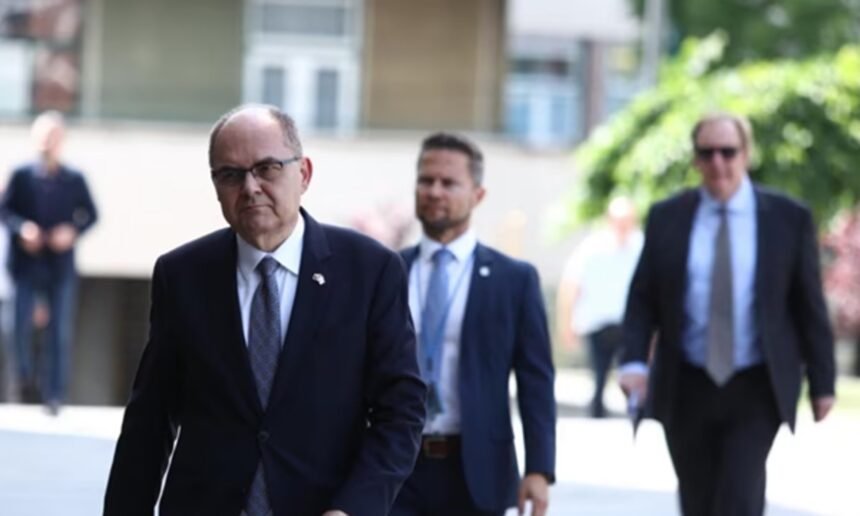
Outgoing High Representative Christian Schmidt announced he will step down by the end of June for “personal reasons,” though his successor has not yet been confirmed.
The debate reflects Bosnia’s continuing political deadlock nearly three decades after the Dayton Agreement ended the war, with international actors remaining deeply involved in safeguarding stability and constitutional order in the country.