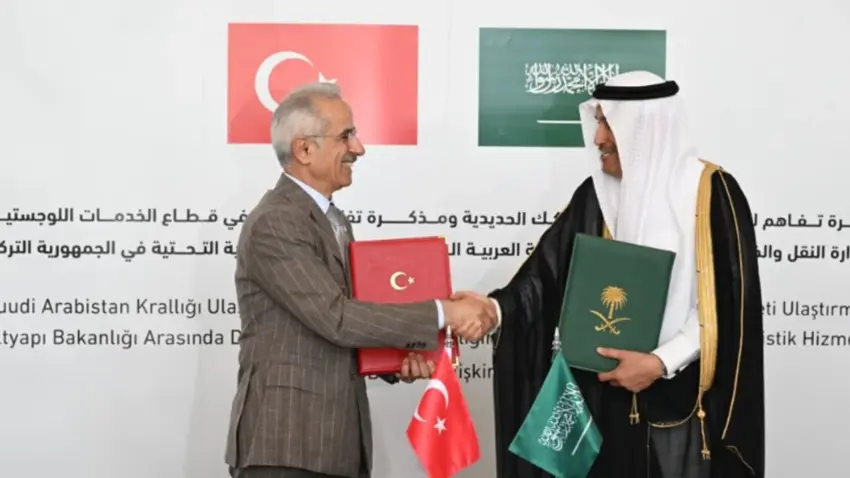
In a major geopolitical and infrastructural development, Turkey and Saudi Arabia have reached a historic agreement to renovate and reactivate the legendary Hejaz Railway.
The massive project, originally constructed at the beginning of the 20th century by the Ottoman Empire to connect Istanbul with the holy Islamic cities of Mecca and Medina, is set to be transformed into a modern regional transit corridor. According to reports from Sabah, the agreement signed on Tuesday, June 9, 2026, aims to completely rebuild and modernize damaged segments of the track to boost Middle Eastern trade, tourism, and logistics.
Restoring a Century-Old Icon of Trans-Continental Transit
The original Hejaz Railway, built between 1900 and 1908 under the order of Ottoman Sultan Abdul Hamid II, was a marvel of engineering for its time. It slashed a perilous, months-long desert trek for Hajj pilgrims down to just a few days.
However, the line suffered catastrophic damage during World War I—becoming a frequent target of guerrilla attacks, famously associated with the campaigns of “Lawrence of Arabia.” For over a century, major chunks of the tracks sat broken, abandoned, or preserved purely as historical open-air museums in the desert.
[The Hejaz Railway Restoration Pipeline]
• Objective: Rebuild, modernize, and link broken historical rail links across borders.
• Primary Route: Linking Turkey down through Syria and Jordan into Saudi Arabia.
• Modern Scope: Integrating high-speed rail capabilities for cargo and passengers.
• Core Goal: Creating an alternative trans-continental trade corridor bypassing maritime chokepoints.
From Pilgrim Route to a Strategic Economic Corridor
While the 20th-century iteration of the line focused heavily on religious pilgrimage, the 2026 agreement between Ankara and Riyadh shifts the project into a high-stakes macroeconomic tool.
By restoring the network, both nations intend to establish a highly competitive, land-based alternative to traditional maritime shipping lines.
                  ┌────────────────────────────────┐
                  │   THE MODERN REGIONAL MATRIX   │
                  └───────────────┬────────────────┘
                                  │
         ┌────────────────────────┼────────────────────────┐
         ▼                        ▼                        ▼
┌──────────────────┐     ┌──────────────────┐     ┌──────────────────┐
│ ECONOMIC IMPACT  │     │ TOURISM & FAITH  │     │ REGIONAL SECURITY│
├──────────────────┤     ├──────────────────┤     ├──────────────────┤
│ Seamless cargo   │     │ High-speed passenger│ Reduces dependence│
│ freight shipping │     │ trains for cultural  │ on highly volatile│
│ between the Gulf │     │ exchange and safe    │ maritime straits  │
│ and Europe.      │     │ Hajj access.         │ like the Red Sea. │
└──────────────────┘     └──────────────────┘     └──────────────────┘
Overcoming Complex Cross-Border Hurdles
Geopolitical analysts point out that the implementation of the project will require extensive diplomatic coordination, as the historical line physically cuts through Syria and Jordan before crossing into Saudi territory.
Nevertheless, the formal agreement between Turkey and Saudi Arabia signals a deep, structural rapprochement between the two regional heavyweights, who are increasingly prioritizing infrastructure-led integration to stabilize the Middle East’s economic future.
Both Ankara and Riyadh have confirmed that joint technical teams will begin initial mapping and feasibility assessments on the inactive segments of the line immediately, bringing one of the Islamic world’s most historic transport symbols back to life.