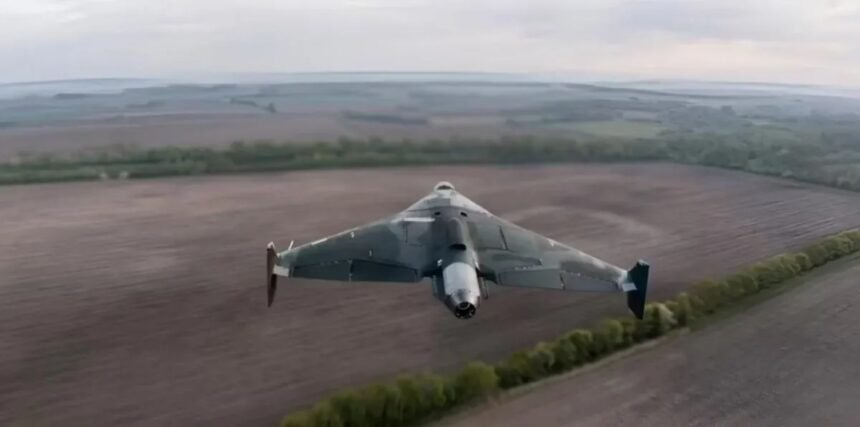
Russia has established a new network of bases for launching long-range drones and jet-powered systems, some of which are positioned in locations that could potentially place NATO targets, including Warsaw, within their possible strike range.
According to an investigation published by The Telegraph, based on satellite imagery and leaked documents, at least 10 Russian bases have been identified along the borders with Belarus and Ukraine.
At least 59 new launch rails have been constructed at these sites, with around 20 reportedly longer than conventional models, potentially indicating their use for newer drones with greater operational range.
The focus is on the Geran-4 and Geran-5 drones, which are linked to the Shahed family. According to the report, the Geran-5 may have an operational range of around 1,000 kilometers and be capable of carrying a warhead weighing up to approximately 90 kilograms.
The higher speed of these models could make them more difficult for air defense systems to intercept.
Some of the new bases have been established on former military infrastructure and airfields, while one facility is reportedly capable of accommodating more than 1,000 drones at a time.
According to the investigation, several of the bases have already been used to launch attacks against Ukraine, while seven of the 10 identified facilities were reportedly used in recent attacks on Kyiv.
The location of some of the bases has raised particular concerns in Poland, as Warsaw could potentially fall within the range of some of the new drones.
However, the report emphasizes that there is no evidence that Russia is currently planning an attack on Poland.
NATO, meanwhile, is increasing its readiness to respond to drone threats, particularly along the Alliance’s eastern flank.
The expansion of this network is expected to increase pressure on European countries to strengthen detection systems, counter-drone defenses and the security of critical infrastructure.