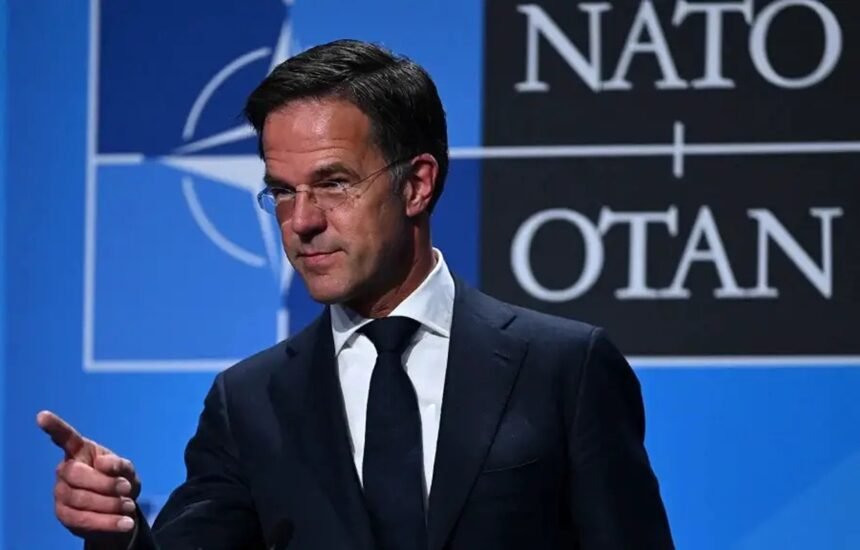
NATO Secretary General Mark Rutte has sought to reassure the alliance’s members that NATO is prepared to respond to sabotage, drone incidents and other hybrid threats across Europe, saying Russia’s actions will not divide the alliance.
Speaking at a commemorative event marking the 25th anniversary of the September 11 attacks in New York on Thursday, Rutte said NATO had response plans in place for a range of hybrid threats, including cyberattacks, sabotage, arson and incursions into Allied airspace.
“Russia is increasingly taking action in the cyber domain and elsewhere, but NATO is ready for this,” Rutte said, stressing that the alliance had “all the response options” necessary to deal with hybrid incidents.
He said responses would not necessarily always be public, adding that NATO would determine the timing and nature of its response according to what would have the greatest impact.
Rutte: Putin Is “in a Bad Place”
Rutte argued that Russia’s continued difficulties in Ukraine were contributing to an increase in hybrid activity against NATO countries.
“Putin is in a bad place,” Rutte said, arguing that Russia is not winning the war in Ukraine and that NATO members should remain calm.
He urged Allies to continue supporting Ukraine, saying that providing additional assistance to Kyiv would send a stronger signal to Moscow in response to hybrid incidents.
“Whatever happens in the hybrid domain, we are prepared for that,” Rutte said, adding that NATO’s message should be one of resolve and continued support for Ukraine.
Rutte also said Russia was significantly increasing its military production and defence spending, warning that NATO should not underestimate Moscow’s ability to expand its military capabilities.
At the same time, he stressed that NATO remains stronger and that Russia knows the alliance would defend every inch of Allied territory if it were attacked.
Denmark Warns of Rising Russian Threat
Rutte’s comments came on the same day that Denmark’s Defence Intelligence Service (DDIS) issued a new assessment warning of an escalation in Russia’s hybrid campaign against NATO and the West.
The Danish service assessed that Russia is expected to further intensify its hybrid activities against NATO and Western countries in the coming months. It also assessed a low but increasing risk that Russia could carry out a limited military attack against a NATO member, while saying a full-scale invasion of a NATO country remains unlikely.
Rutte, however, echoed the assessment that a full-scale Russian invasion of NATO territory is unlikely, while stressing that the alliance cannot afford to be complacent.
NATO has previously said that its response to hybrid attacks can include both visible and non-public measures. Rutte cited the alliance’s Baltic Sentry operation, established to strengthen protection of critical undersea infrastructure in the Baltic Sea, as one example of NATO’s response to security threats in the region.
Reports of Potential Russian Drone Operation
The warnings also come amid reports in Spanish media that U.S. intelligence has alerted several European countries to a possible Russian operation involving long-range drones launched from commercial vessels, potentially targeting locations in Spain, France or Italy.
According to El Mundo, as reported by Euronews, the alleged scenario involves drones with a range of around 600 kilometers being launched from commercial ships. The report has not been independently confirmed by the U.S. government.
NATO has separately highlighted the growing range of threats facing its members, including cyberattacks, sabotage, arson and airspace incursions, while reaffirming that the alliance is strengthening its defences.