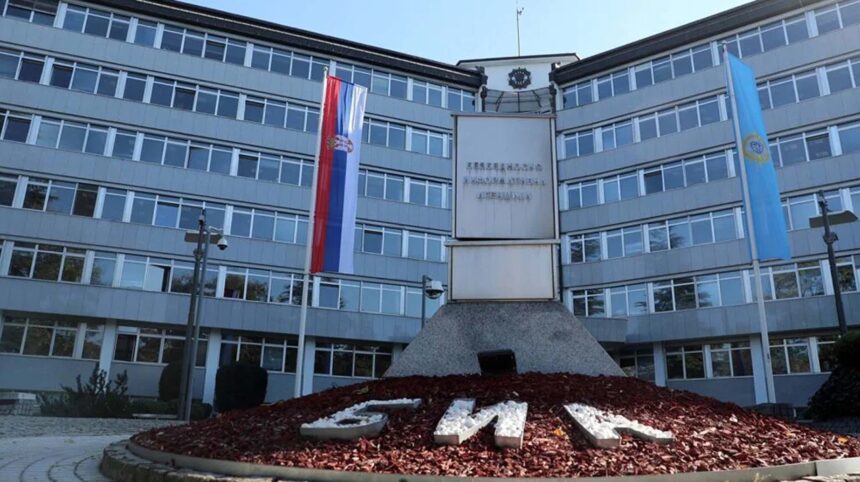
Serbia’s Security Intelligence Agency (BIA) is celebrating its anniversary by honouring figures associated with repression, while its own record of surveillance and alleged abuses raises serious questions about accountability. The ceremony is not merely a tribute to history; it highlights the disturbing legacy of Serbia’s security apparatus and the agency’s own conduct.
BIA Director Vladimir Orlić and senior agency officials laid wreaths at monuments to Aleksandar Ranković and Slobodan Penezić Krcun, prominent figures in Yugoslavia’s post-war security apparatus. For Kosovo Albanians, Ranković’s legacy is closely associated with an era of state repression, police abuses and political persecution under Yugoslav rule.
By honouring these figures without acknowledging the victims of their policies, BIA chooses to celebrate the legacy of the security apparatus while leaving a painful part of Kosovo’s history unaddressed.
But BIA’s own record raises questions that go far beyond historical memory.
In December 2024, Amnesty International published a detailed investigation documenting the use of spyware and mobile-phone extraction tools by Serbian authorities to target journalists, activists and peaceful protesters. Based on forensic evidence, Amnesty attributed the NoviSpy spyware campaign to BIA with a high degree of confidence. The investigation documented cases in which spyware was installed on individuals’ phones during encounters with Serbian police or BIA officials, potentially enabling covert access to private communications and personal data.
These findings raise grave concerns about the abuse of intelligence powers. An agency entrusted with protecting national security should not be implicated in the surveillance of journalists, activists and critics exercising their fundamental rights. The public deserves answers, independent investigations and accountability for any unlawful conduct established.
The wider history of Serbia’s security apparatus is equally serious. In May 2023, the UN International Residual Mechanism for Criminal Tribunals upheld the convictions of Jovica Stanišić and Franko Simatović, senior officials of Serbia’s former State Security Service, sentencing both to 15 years in prison. The court found them responsible as participants in a joint criminal enterprise involving crimes against non-Serb civilians in parts of Bosnia and Herzegovina and Croatia. These were convictions against specific individuals, not the present-day BIA as an institution, but they demonstrate the grave crimes for which senior figures within Serbia’s former security structures have been held accountable.
BIA was formally established in 2002, following the end of the former State Security Directorate. Its leadership cannot automatically be held criminally responsible for every crime committed by earlier institutions. However, an agency that celebrates this institutional legacy must also be willing to confront the repression and abuses associated with it—and answer for allegations concerning its own conduct.
For Kosovo Albanians, this is not an abstract historical debate. Generations experienced discrimination, surveillance and persecution under Serbian rule. Honouring figures associated with that past without recognising their victims reinforces concerns about how Serbia remembers its history and whether it has adequately confronted the abuses committed by its security institutions.
BIA must be scrutinised for its own actions, not merely for the historical figures it honours. Credible evidence of unlawful surveillance and other abuses must lead to independent investigations, and anyone found criminally responsible must face the consequences under the law.
A wreath cannot erase the victims. An anniversary cannot absolve an institution of accountability. And national security cannot serve as a shield for abuses of state power.
Serbia’s BIA is celebrating its anniversary while serious questions remain about its legacy and conduct. The victims deserve recognition, the public deserves transparency, and those responsible for crimes must be held accountable regardless