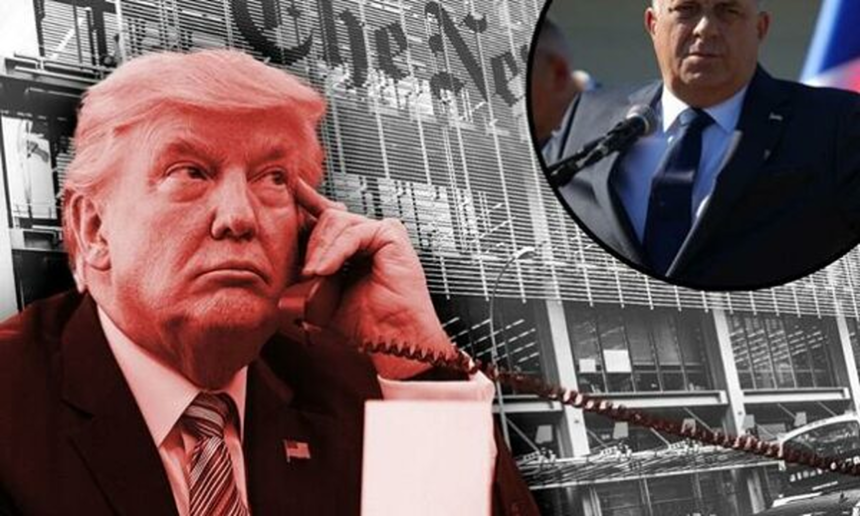
Milorad Dodik’s government in Republika Srpska has reportedly spent hundreds of thousands of dollars on a network of lobbyists, lawyers and political operatives with close ties to Donald Trump’s inner circle, according to The New York Times.
The network includes former Trump campaign officials and advisers James Blair and Chris LaCivita, who reportedly received hundreds of thousands of dollars through a law firm representing Republika Srpska. The entity also began paying Washington lobbying firm Continental Strategy $35,000 per month in February, according to U.S. Justice Department records cited by the newspaper.
The lobbying effort reportedly aimed to strengthen ties with Washington, attract investment in energy projects, influence political developments and secure the removal of U.S. sanctions. Those sanctions were lifted late last year following an expensive lobbying campaign.
The report also details efforts to explore a proposed natural gas pipeline linking Croatia with the Western Balkans, involving Texas energy entrepreneur John V. Calce and people connected to Trump’s political and business circles.
The activities have raised questions about potential conflicts of interest and whether political connections are being used to secure financial and political advantages. Trump himself responded to the revelations about his advisers by warning that he would dismiss them immediately if a conflict of interest existed.
Dodik, whose political movement has maintained close ties with Moscow, has increasingly sought to present Republika Srpska as an ally of Trump’s conservative agenda.
The central question is whether this lobbying network serves legitimate economic interests or allows politically connected individuals to profit from access to the highest levels of American power. Transparency and accountability are essential, particularly when the interests of a foreign political entity and the U.S. administration overlap.