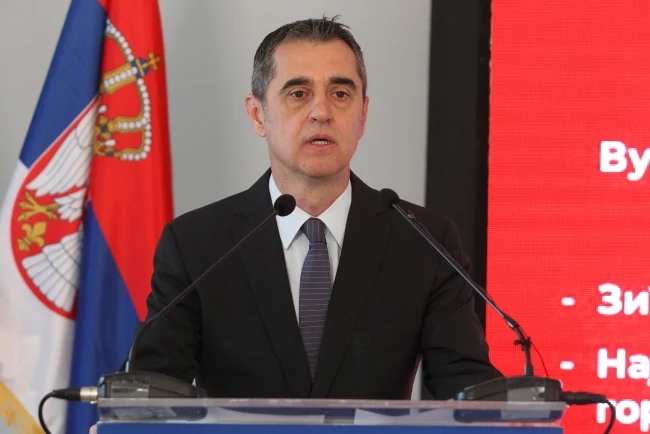
Dušan Nikezić, Vice President of the opposition Stranka Slobode i Pravde (Party of Freedom and Justice – SSP), has fiercely criticized newly unveiled government tax proposals, accusing the state of abandoning Serbia’s most vulnerable populations while shielding highly lucrative gambling interests.
The political firestorm follows an investigative report by N1 Television revealing that the Ministry of Finance has drafted sweeping amendments to two foundational laws—the Law on Citizens’ Income Tax and the Law on Mandatory Social Security Contributions. The changes, currently undergoing public debate, are scheduled to take effect in January 2027 and will systematically strip employers of long-standing tax relief and subsidy incentives.
The Proposed 2027 Tax Rollobacks
According to the draft legislation published on the Ministry of Finance’s website, the state intends to completely eliminate fiscal incentives that have historically driven inclusive hiring practices in the private sector.
[The 2027 Fiscal Rollback Blueprint]
• Cut Target 1: Employers will no longer receive tax deductions for hiring persons with disabilities (PWDs).
• Cut Target 2: Tax credits for hiring long-term unemployed citizens registered with the National Employment Service (NSZ) will be permanently abolished.
“A Shameless Prioritization of Wealth Over Welfare”
In a sharply worded public memorandum on Tuesday evening, June 9, 2026, Nikezić argued that the Ministry’s narrative of fiscal tightening is an artificial smoke screen designed to mask deeply corrupt economic priorities.
The SSP economic chief emphasized the staggering disparity between how the state treats struggling workers versus how it treats the country’s booming gambling sector.
“The state claims it lacks the funds to maintain tax relief for persons with disabilities,” Nikezić stated. “Yet, at the exact same time, it has granted bookmakers, casinos, and gambling houses the absolute most favorable tax treatment in Europe, enabling that industry to generate an annual revenue exceeding €1.2 billion.”
               ┌────────────────────────────────────────────────────────┐
               │           NIKEZIĆ'S FISCAL ASYMMETRY ANALYSIS          │
               └───────────────────────────┬────────────────────────────┘
                                           │
                    A Contrast of Serbian State Financial Policy
                                           │
             ┌─────────────────────────────┴─────────────────────────────┐
             ▼ THE CASINO ECOSYSTEM                                      ▼ THE INCLUSIVE LABOR MARKET
┌──────────────────────────────────────────┐┌──────────────────────────────────────────┐
│ • Enjoys deep institutional tax shields.  ││ • Long-standing fiscal reliefs set to    │
│ • Accumulates over €1.2 billion annually.││   be entirely revoked by January 2027.   │
│ • Sheltered by state regulatory policy.  ││   Leaves disabled workers vulnerable.     │
└──────────────────────────────────────────┘└──────────────────────────────────────────┘
Subsidies, Cronyism, and “Voter Importation”
Nikezić further expanded his critique into a broader assault on the ruling administration’s industrial subsidy network. He alleged that while native, disadvantaged Serbian citizens are being economically squeezed out of the workforce, billions in state budgetary handouts continue to flow freely into corporate entities tightly aligned with the political elite.
In a highly charged political accusation, Nikezić directly tied several of these subsidized, state-favored enterprises to the ruling party’s alleged “voter importation” schemes—suggesting that public funds are being recycled to artificially manipulate municipal and national voter registries.
With the public debate window on the tax amendments rapidly closing, opposition groups, labor syndicates, and human rights organizations are scrambling to form a unified front. They warn that if the Ministry of Finance proceeds with its January 2027 roadmap, it will trigger an immediate wave of layoffs among disabled workers and fundamentally damage Serbia’s corporate social responsibility framework.