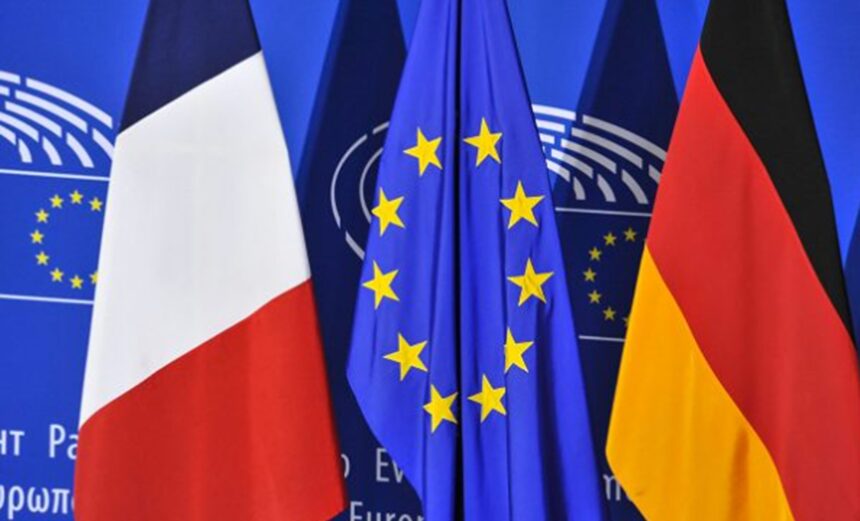
France and Germany have proposed that the European Union establish a new mechanism for a rapid response to countries that harm the bloc’s economic interests, at a time when trade is increasingly being used as an instrument of political pressure, according to Reuters.
German officials said the EU needs a powerful tool comparable to U.S. Section 301 tariffs or China’s restrictions on rare-earth mineral exports.
The proposal does not directly target any particular country, but rather practices that distort competition, such as dumping, extensive state subsidies and restrictions on currency convertibility.
In a joint document published ten days before an EU summit where the bloc’s trade imbalance with China is also expected to be discussed, the two countries warned that persistent and systematic market distortions threaten the European economy and its industrial base.
France and Germany are calling on the EU to use existing trade-defense instruments more quickly and effectively, while conducting more investigations and expanding measures so they can cover entire sectors.
According to the two countries, the European response should be faster when dealing with practices that could lead to job losses and weaken the continent’s industrial base.
The two countries are also urging the European Commission to swiftly propose two new economic-security instruments. The first would seek to reduce the dependence of European companies on a single source for critical supplies, while the second would allow the EU to restrict access to the single market for countries that undermine fair competition through political or economic means.
According to the document, countermeasures proposed by the European Commission could be adopted through a procedure under which they would enter into force unless opposed by a qualified majority of member states.
Berlin wants the new mechanisms, if created, to be capable of being activated very quickly, potentially within a matter of days.
However, the relevant legislation would still require approval from EU member-state governments and the European Parliament.
An adviser to the French president said action was urgent, as imbalances with some trading partners had become unsustainable.
Paris and Berlin are calling on the EU to move away from what they describe as “naivety” in trade policy and to use its instruments more decisively to protect European industry and the bloc’s economic security.