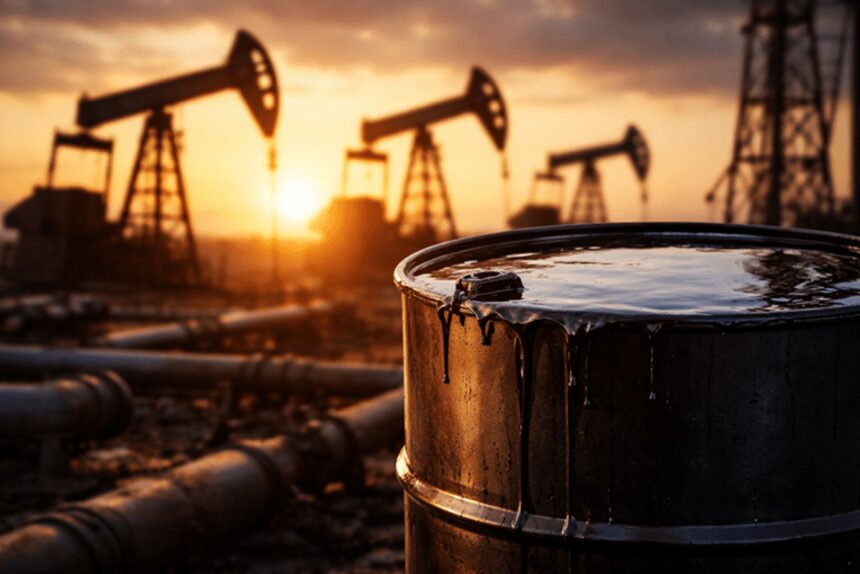
Fuel is being transported from South Korea to Russia aboard sanctioned tankers as Moscow seeks to secure supplies amid the war in Ukraine, a move that one expert said “undermines” Seoul’s public support for Kyiv.
An analysis by The Guardian of port and vessel-tracking data found that more than 176,000 tonnes of fuel, mostly diesel, were loaded at several South Korean ports in July and August onto seven tankers that made 14 voyages to Russia’s Far East, The Guardian reported.
Three of the vessels were sanctioned by the United Kingdom and the EU, while one received its cargo through a ship-to-ship transfer in South Korean waters—a method that can obscure the origin of a shipment and allow vessels to avoid stopping at port terminals.
“It is shocking that EU-sanctioned tankers loaded fuel at South Korean ports and transported it to Russia,” said Isaac Levi, an analyst at the Centre for Research on Energy and Clean Air (CREA), a Finnish research organization. “This undermines the sanctions regime and South Korea’s support for Ukraine.”
Seoul has provided Ukraine with humanitarian aid and non-lethal military supplies, including helmets, protective vests and mine-clearing vehicles. In 2023, it pledged $2.3 billion in support, most of it in the form of loans.
However, South Korea has long sought to balance its support for Ukraine with its desire to improve relations with Russia. Throughout the war, Seoul has ruled out directly supplying weapons to Ukraine, in line with its policy of not providing lethal weapons to countries engaged in war. Moscow has signaled an interest in restoring relations with South Korea, including trade ties.
While the fuel trade involves vessels sanctioned by some of Seoul’s Western partners, it does not appear to violate South Korean law. South Korea’s own measures against Russia are largely based on export controls covering goods such as industrial machinery, electronics and vehicles.
Nevertheless, the shipments risk making Seoul appear to be a weak link in Western efforts to pressure Russia, as relations with Kyiv have become strained over the transfer of two North Korean prisoners of war to South Korea, which Seoul says was supposed to remain confidential.
It remains unclear who owned or sold the fuel, as South Korean port data does not disclose that information.
The largest carrier, the sanctioned Layla, made two voyages from the southeastern port of Ulsan to Vladivostok, departing on July 19 and August 10 and transporting a total of 57,000 tonnes of diesel. On its first voyage, it told South Korean authorities that its destination was Vladivostok, but on the second it declared that it was headed for Niigata, Japan.
Another sanctioned tanker, the Russian-flagged Astoria, which is also subject to Australian sanctions, loaded nearly 11,000 tonnes of fuel at Ulsan on August 1. It declared Japan as its destination before sailing to Vladivostok.
The third sanctioned tanker, Chongchon, never docked at a port. In early August, it received around 26,000 tonnes of fuel from the non-sanctioned tanker Celeste I in a ship-to-ship transfer near Yeosu, a port in southern South Korea. It then headed for Vladivostok after declaring Singapore as its destination.
The owners and managers of the four tankers did not respond to requests for comment.
Russia’s oil-refining capacity has been severely affected by Ukrainian drone attacks. Refinery output fell in June to its lowest level in more than 20 years, while oil production has declined by nearly 30% compared with last year, according to the International Energy Agency.
Ukraine’s military intelligence agency, the HUR, said Moscow has been forced to import fuel products to supply “the Russian war machine.”
According to data from maritime analytics firm Kpler, buyers included Rosneft, Russia’s state-owned oil company, which is sanctioned by the UK, US, EU and Australia, as well as NNK, a Russian oil group whose owner, Eduard Khudainatov, and one of his companies, NNK-Oil, are sanctioned by the UK.
In August, Russia imported 368,000 tonnes of petroleum products by sea—more than seven times the previous month’s figure and the highest monthly total since the full-scale invasion of Ukraine, according to Kpler data analyzed by CREA. South Korea accounted for 112,000 tonnes, or 31% of the total, second only to India.
Shipments from South Korean ports began increasing in July, just as the country’s president, Lee Jae Myung, pledged $100 million for Ukraine’s reconstruction at a NATO summit in Türkiye.
A 2025 study by a trade association found that nearly 80% of South Korean companies that had stopped exporting to Russia since the start of the war were open to resuming trade.
In March, as the war with Iran closed the Strait of Hormuz, South Korea restricted exports of certain fuels and imported Russian oil under a U.S. sanctions waiver.
On October 1, the UK temporarily exempted existing South Korean gas contracts from a ban on maritime services for Russian LNG, which comes into force in January 2027.
When contacted, South Korea’s foreign ministry did not comment specifically on the shipments or the sanctioned tankers. In a statement, it said that, as “a responsible member of the international community, the government supports and is actively participating in international efforts to help end the war in Ukraine and bring about a peaceful recovery.”
It said it had expanded its export controls on Russia under the Foreign Trade Act “beyond strategic items to 1,402 non-strategic items with high potential for diversion to military use” and was “strictly enforcing” them.
The government “continues to monitor the implementation of its export controls on Russia and, when necessary, takes action in accordance with relevant laws and regulations,” the ministry said.
The UK Foreign Office did not respond to questions about UK-sanctioned tankers using South Korean ports, nor did it say whether the issue of the shipments had been raised with Seoul.
A spokesperson said: “The UK remains firmly committed to effective monitoring of our sanctions and to working with international partners to increase economic pressure on Russia and reduce the revenues that finance its illegal war against Ukraine.”