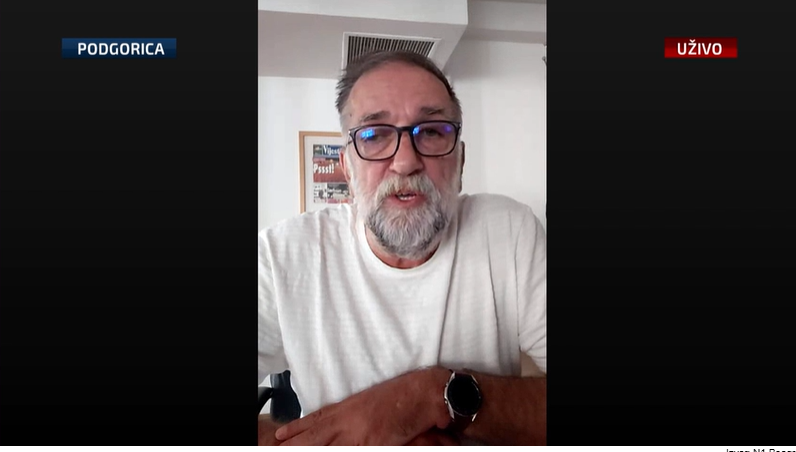
Vukašin Obradović, a prominent editor at the Montenegrin daily Vijesti, unpacks the bizarre choreography behind the 87 detained Serbian nationals, calling out the state-sponsored “security hysteria” engineered by Belgrade to dominate the EU summit.
The dramatic interception and immediate deportation of 87 Serbian nationals at Tivat Airport has left Montenegrin society grappling with a central question: What message was Serbian President Aleksandar Vučić trying to send, and who was the intended audience?
In an analytical breakdown broadcast by N1, Vukašin Obradović, a senior editor at the Podgorica-based daily Vijesti, characterized the entire incident as a boundary-pushing paradox—bordering on total absurdity.
Obradović revealed that just 24 hours prior to the airport standoff, Montenegrin Prime Minister Milojko Spajić had explicitly warned parliament that dynamic, disruptive security developments could target the country during the high-level EU-Western Balkans Summit. It now appears state counter-intelligence was actively tracking the inbound threat.
Anatomy of a High-Profile Blunder
According to eye-witness accounts and airport logs detailed by Obradović, the incoming charter flight from Belgrade had zero chance of evading detection. The passenger manifest presented a highly specific, unified profile:
- The Demographics: The 87 men were uniformly dressed, heavily muscled, and distinctively tattooed.
- The Propaganda: They arrived carrying massive, pre-fabricated banners reading “Srbija Pobeđuje” (Serbia Wins).
- The Logistics: Two commercial buses bearing Serbian license plates were already parked outside the terminal, waiting on the tarmac to transport the group, indicating an extensively coordinated logistical footprint on Montenegrin soil.
┌────────────────────────────────────────────────────────────────────────┐
│             The Tivat Paradox: Covert Mission vs. Public Stunt         │
├────────────────────────────────────────────────────────────────────────┤
│ THE SECRECY MYTH                                                       │
│ BIA frames the charter flight as a routine, low-profile transport.     │
├────────────────────────────────────────────────────────────────────────┤
│ THE VISUAL REALITY                                                     │
│ 87 identically dressed, muscular men land with political banners       │
│ into a town saturated with dozens of European intelligence services.   │
├────────────────────────────────────────────────────────────────────────┤
│ THE ANALYTICAL CONCLUSION                                              │
│ The operation was deliberately designed to be intercepted, manufacturing│
│ a crisis to position Vučić as a regional martyr.                       │
└────────────────────────────────────────────────────────────────────────┘
“What stands out to me as completely absurd is the question of whether this was meant to be a secret or a highly public operation,” Obradović observed. “If you send 87 individuals on a charter flight who attract intense attention by their sheer physical appearance, you cannot expect to slip under the radar—especially in a coastal city that currently holds the highest density of international security agencies in the region.”
“That is the grand enigma of Tivat,” the editor continued. “It feels as though someone wanted this operation to fail, ensuring that all of Europe and the Balkans would spend the week buzzing about the fallout.”
Retaliation on the Border: Creating a ‘Suffocating Atmosphere’
Following Podgorica’s refusal to let the unvetted group pass, the Vučić administration moved swiftly into its standard geopolitical playbook.
Obradović confirmed that Serbian border police have drastically tightened restrictions across all transit crossings into Montenegro. Montenegrin citizens are currently being pulled aside and detained for hours-long vehicle searches without any clear legal explanation or administrative justification.
“It has generated a deeply suffocating and agonizing atmosphere at the borders,” Obradović stated. “Regular citizens are paying the price for a manufactured row, with Serbian authorities weaponizing border queues simply because their political operation in Tivat was dismantled.”
The Martyrdom Playbook: Enter the ‘Zvicer’ Threat
In a move that local analysts treat with immense skepticism, Serbia’s Security Intelligence Agency (BIA) issued a formal travel advisory warning President Vučić to boycott the Tivat summit. The agency claimed it had actionable intelligence placing Radoje Zvicer—the fugitive leader of the notorious Kavač organized crime clan—inside Montenegro, posing an imminent threat to Vučić’s life.
Obradović dismissed the BIA’s warning as transparent political theater.
“The irony is staggering,” Obradović concluded. “The BIA, which by all indications directly organized and financed the arrival of these 87 loyalists to Tivat, turns around and informs Vučić that his safety is compromised in Montenegro.”
“This is not Vučić’s first time organizing these types of artificial media happenings. Whether he is orchestrating a diplomatic standoff over visiting Jasenovac or traveling to Tivat, the narrative is always identical: He is perpetually endangered, foreign forces are working against the Serbian people, and he alone stands at the gates to protect the nation. It is a well-worn political circus.”
With Vučić arriving in Tivat despite the manufactured panic, regional diplomats are waiting to see if his plenary speech will further torch bilateral relations, or if the reality of EU integration will force a shift toward a more subdued tone.