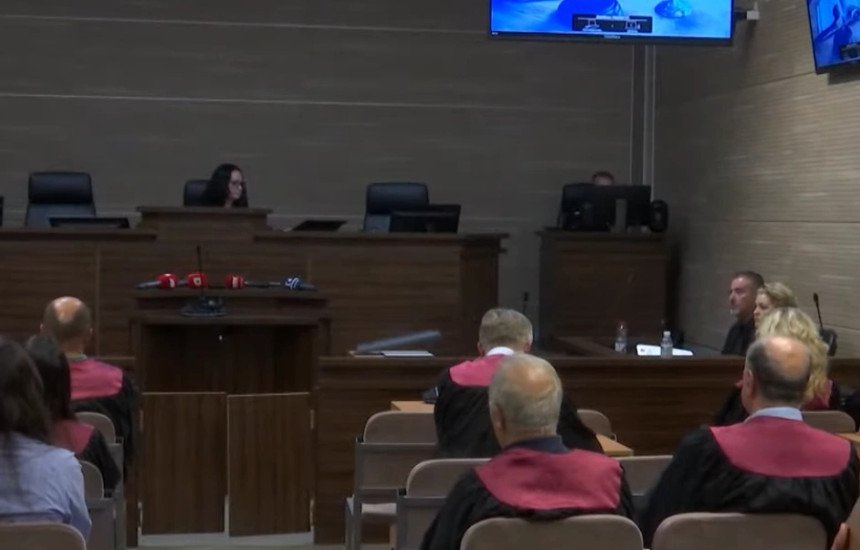
The highly anticipated opening of a trial in absentia against 21 ethnic Serb defendants accused of orchestrating the mass deportation of over 800,000 Kosovo Albanians during the 1999 war collapsed in chaos on Wednesday, derailed by systemic institutional failures, unequipped defense attorneys, and an untimely power outage.
The criminal indictment, filed by the Special Prosecution Office in August of last year, targets 21 individuals for war crimes against the civilian population. It addresses one of the most agonizing chapters of the conflict—the state-sponsored campaign of forced displacement.
A Cascade of Institutional Blunders
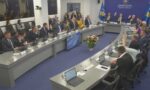
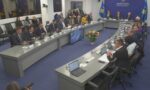
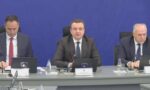
The preliminary hearing at the Basic Court of Prishtina unraveled immediately upon opening, exposing a total lack of coordination between the judiciary and legal representatives:
- Missing Defense Roster: Presiding Judge Medie Bytyqi revealed that the Kosovo Bar Association (OAK) had completely failed to notify the court of the finalized list of court-appointed public defense attorneys assigned to represent the absent defendants.
- Unprepared Attorneys: The defense lawyers who did show up had no idea which specific defendants they were representing and had never been provided with the official indictment or case files.
- The Vanishing Lawyers: Judge Bytyqi called a brief recess to distribute copies of the indictment to the attorneys. However, when court reconvened, one defense lawyer was entirely unaccounted for, and two others failed to return to the courtroom at all, forcing an immediate cancellation of the day’s proceedings.
Then, the Lights Went Out
As remaining defense lawyers pleaded with the judge to wait a few extra minutes for their colleagues to return to save the session, a final infrastructural breakdown sealed the trial’s postponement.
“Besides all this, exactly at 11:00 AM, our electricity is getting cut off,” Judge Bytyqi pointed out, citing a scheduled power outage at the court facility.
A 27-Year Wait for Justice Put on Hold
The logistical failure drew immediate, sharp criticism from transitional justice watchdogs. Amer Alija, a senior legal expert at the Humanitarian Law Center (HLC), stressed that the judiciary must establish rigorous communication protocols with the Bar Association to ensure court-appointed attorneys respect the gravity of war crimes tribunals.
“The court must ensure that the presence of court-appointed defense lawyers is guaranteed so that these delays do not happen,” Alija stated. “Cases of war crimes have waited long enough—they have waited 27 years for justice.”
A new date for the preliminary hearing has yet to be scheduled by the court.