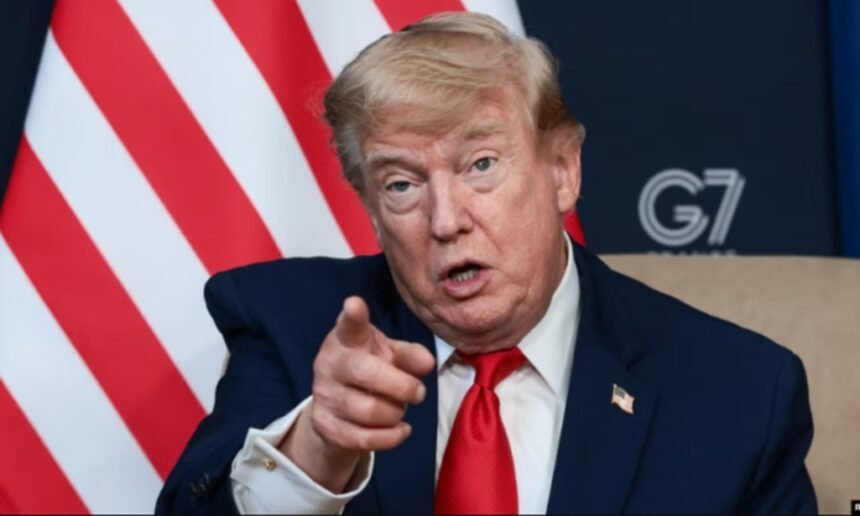
U.S. President Donald Trump said on Tuesday that the framework agreement expected to be formally signed with Iran later this week makes it “clear and loud” that Tehran will not develop or possess nuclear weapons.
“The only thing that really matters to me is that Iran never has a nuclear weapon, and that is stated clearly and strongly in the agreement,” Trump told reporters during the G7 summit in France.
Trump also issued a stark warning, saying that Iran would “face hell” if it attempted to acquire nuclear weapons.
“We have completed our agreement with Iran, and it should be successful if it moves into a second phase. I actually think that part will be easier,” he added.
According to senior U.S. administration officials, the United States and Iran electronically signed a memorandum of understanding on June 15 aimed at ending the three-month conflict and reopening the Strait of Hormuz.
The agreement is expected to be formally signed in Geneva, Switzerland, on June 19.
The framework reportedly extends the current ceasefire by 60 days, allowing both sides to negotiate a permanent settlement to the conflict that began on February 28 with U.S. and Israeli airstrikes against Iran.
Iranian Foreign Minister Abbas Araqchi said the most important element of the memorandum is the declaration of an immediate and permanent end to hostilities on all fronts, including Lebanon.
Trump has recently expressed frustration with Benjamin Netanyahu over continued Israeli strikes in Lebanon targeting Hezbollah positions. While reaffirming his support for Israel, Trump said Netanyahu should be more “responsible” regarding developments in Lebanon.
Mixed Signals About the Agreement
Both Washington and Tehran have claimed the agreement as a diplomatic success, but uncertainties remain regarding its exact contents.
Iran’s state-affiliated news agencies reported that the 14-point memorandum includes future negotiations on nuclear issues and the complete lifting of sanctions against Iran. Meanwhile, U.S. officials insist that the central objective remains preventing Iran from obtaining nuclear weapons and ensuring freedom of navigation through the Strait of Hormuz.
The waterway, through which roughly one-fifth of the world’s oil and gas supplies normally pass, was effectively disrupted during the conflict, causing major concerns in global energy markets and affecting the world economy.
Washington says maritime transit through the Strait will remain toll-free for 60 days while broader regional negotiations continue. However, Iranian media reports suggest that future shipping regulations in the Persian Gulf could be coordinated by Iran and Oman, highlighting continuing differences between the two sides.
Analysts believe it could take several weeks before commercial traffic through the Strait of Hormuz returns to normal levels.