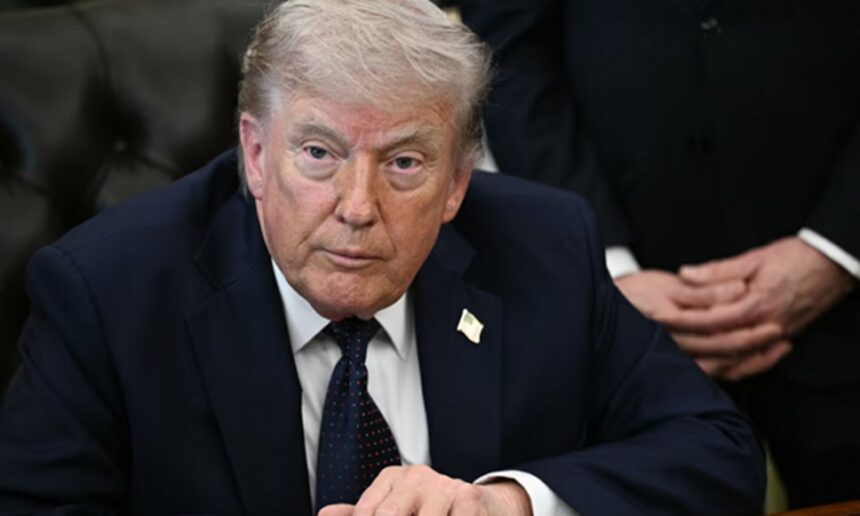
U.S. President Donald Trump has strongly rejected claims that the United States will pay $300 billion to Iran as part of an emerging diplomatic framework. The denial comes amid intense public scrutiny over a preliminary memorandum of understanding (MoU) designed to end recent hostilities and establish a path forward on nuclear negotiations.
The controversy erupted following media reports detailing a massive reconstruction and economic development plan linked to the peace talks. Critics and political opponents quickly questioned whether the package constituted direct financial aid or war reparations funded by American taxpayers.
Taking to Truth Social, President Trump forcefully dismissed the reports as political propaganda:
“There is no $300 billion payment to Iran from the U.S. This is Fake News! All there is for the U.S. is success, lower oil prices, and victory. Look at the stock market. Democrat propaganda in action!!!”
The $300 Billion Framework: Private Capital vs. State Funds
Despite the President’s firm public denial regarding direct U.S. expenditure, senior administration officials and draft diplomatic texts confirm that a $300 billion economic mechanism is a core component of the broader bilateral framework.
According to administration sources, the plan relies entirely on private sector capital rather than government grants or taxpayer money. The initiative is structured to mobilize corporate investment across several global regions:
- Corporate Commitments: The fund aims to aggregate private investments from companies based in the United States, the Gulf Arab states, Asia, South America, and Africa.
- Target Sectors: Initial commitments have reportedly targeted critical infrastructure, including energy, manufacturing, transport, and logistics.
- The U.S. Role: Under Section Six of the MoU, the United States does not provide funding. Instead, Washington commits to working with regional partners to facilitate required licenses, regulatory waivers, and financial clearances to permit these international private transactions.
Phased Relief Tied to Strict Compliance
Vice President JD Vance and other senior officials have emphasized that any economic normalization or access to investment vehicles remains entirely contingent on Tehran’s verifiable performance during an upcoming 60-day negotiation window.
The administration has maintained that “zero dollars” in direct aid or frozen assets have been released. Full implementation of any final economic package remains strictly conditioned on primary American security mandates:
- A permanent and verifiable commitment that Iran will never develop or acquire a nuclear weapon.
- The complete dismantling or dilution of Iran’s existing enriched uranium stockpile.
- The formal cessation of Iranian financial and material support for regional militant networks.
While the administration treats the framework as a transactional victory that reopens vital shipping corridors like the Strait of Hormuz, the proposed $300 billion figure continues to face sharp bipartisan skepticism in Washington, drawing comparisons from critics to past sanctions-relief initiatives.