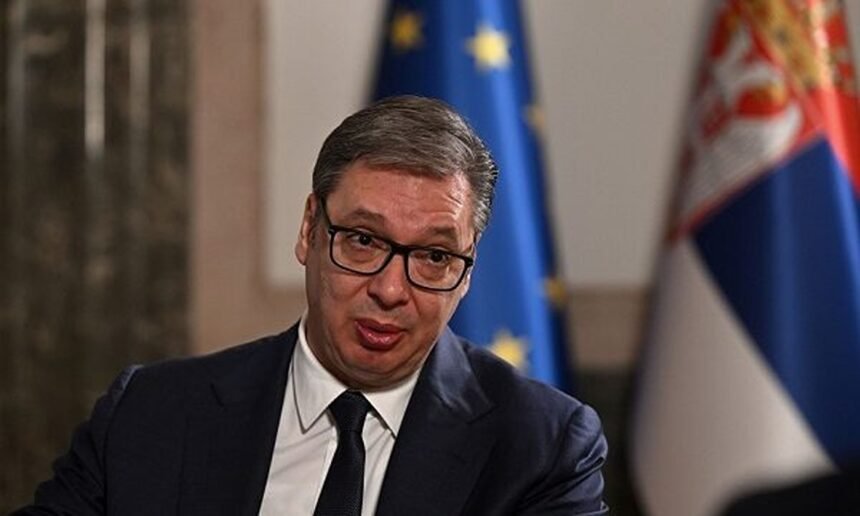
Serbian President Aleksandar Vučić has announced that he plans to step down from the presidency within the next three to four months, a dramatic political development that comes after months of anti-government protests and growing public discontent across Serbia.
Speaking in an interview with Prva TV, Vučić said he intends to leave the presidential office but noted that it has not yet been decided whether Serbia will hold only early presidential elections or simultaneous presidential and parliamentary elections. He said the final decision would be made by the country’s competent institutions.
The announcement comes at a time of heightened political tension following months of nationwide demonstrations led largely by students. The protests were sparked by the deadly tragedy at the Novi Sad railway station, where 16 people lost their lives after the collapse of a station canopy, triggering widespread public anger over alleged corruption, negligence, and lack of accountability within state institutions.
Vučić also revealed that his ruling party, the Serbian Progressive Party (SNS), will organize a major rally in Belgrade on June 27. During the gathering, party officials are expected to unveil the name of their electoral list, campaign slogans, and key elements of their political platform ahead of the next elections.
Political observers in Serbia have increasingly speculated that Vučić could seek to remain the dominant figure in Serbian politics by leading the SNS electoral list as a candidate for prime minister after stepping down as president.
The Serbian president used the interview to sharply criticize his political opponents, accusing them of lacking a clear political program and focusing instead on personal attacks against him.
Vučić also renewed his criticism of Serbian independent broadcaster N1, claiming its audience is trapped in what he described as a “bubble of lies and misinformation” and alleging that he has been prevented from appearing on the channel.
“I am not allowed to appear there because people would be able to hear what is true and what is not,” Vučić said.
N1 has repeatedly rejected such claims, maintaining that the Serbian president has been invited numerous times over the years but has declined to participate in the network’s programs.
The debate resurfaced after Sandro Gozi publicly challenged Vučić to take part in an interview on N1. The broadcaster later canceled Gozi’s planned appearance, stating that invitations to guests are determined solely by editorial decisions and not through arrangements between politicians.
With anti-government protests continuing and opposition groups demanding deeper political reforms, Vučić’s announcement has intensified speculation about Serbia’s political future and the shape of the country’s next electoral battle.