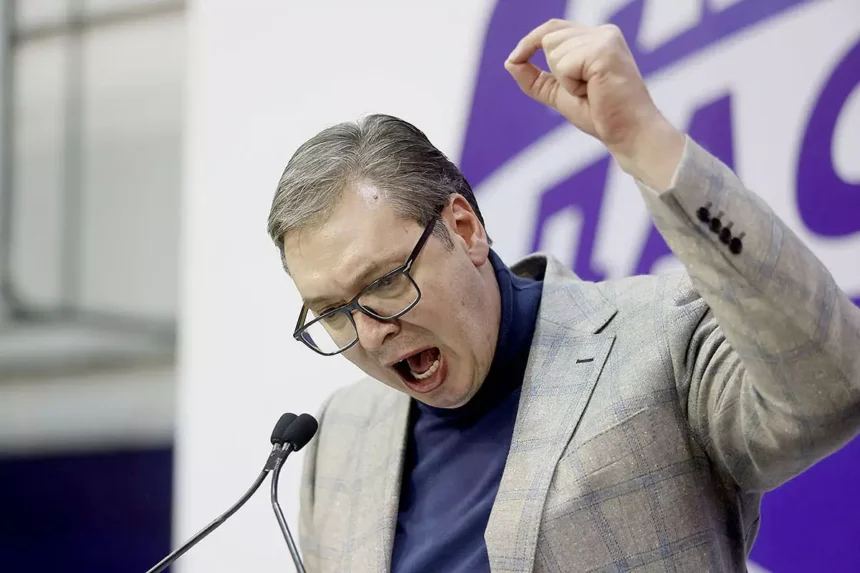
While confronting his hosts over Montenegro’s recognition of Kosovo and the recent deportation of Serbian activists, the Serbian President maintained that open communication lines between Belgrade and Podgorica must be preserved.
Arriving in the Montenegrin coastal resort of Tivat for the high-stakes EU-Western Balkans Summit, Serbian President Aleksandar Vučić seized the media spotlight to deliver an unyielding message regarding regional sovereignty.
While promising to maintain pragmatic, working relations with Podgorica, Vučić openly voiced his deep, long-standing resentment over Montenegro’s formal recognition of Kosovo’s independence—a move he continues to treat as a structural betrayal of Serbian national interests.
Despite the highly charged atmosphere and the severe diplomatic fallout over the recent interception and deportation of his advanced support team, the Serbian head of state asserted that a complete breakdown in communication would be dangerous for the volatile Western Balkans region.
“I will never accept the decision recognizing Kosovo’s independence,” Vučić told reporters on Thursday evening. “However, I firmly believe that we must maintain good relations and constant communication.”
An Olive Branch Tainted by Friction
In an unexpected diplomatic maneuver aimed at demonstrating state leadership despite the ongoing border row, Vučić announced his willingness to host Montenegrin President Jakov Milatović in Belgrade for an official state visit later this year.
The invitation is viewed by regional analysts as an attempt to bypass the more confrontational government of Prime Minister Milojko Spajić and build a direct channel with the presidency.
┌────────────────────────────────────────────────────────────────────────┐
│               The Tivat Press Briefing: Key Positions                  │
├────────────────────────────────────────────────────────────────────────┤
│ • The Red Line: Continuous and absolute rejection of Kosovo’s         │
│   statehood, regardless of EU integration requirements.                │
│ • The Diplomatic Track: Extending a formal invitation to Montenegrin   │
│   President Jakov Milatović to visit Belgrade to lower tensions.      │
│ • The Airport Row: Dismissing the 87 deported Serbian nationals as     │
│   "harmless activists" who posed zero real-world security risks.       │
└────────────────────────────────────────────────────────────────────────┘
Shrugging Off the Airport Standoff
When pressed by local journalists regarding the 87 Serbian nationals who were blocked at Tivat Airport and swiftly deported on national security grounds, Vučić repeated his defense of the group.
He claimed that the entire incident had been deliberately blown out of proportion by Montenegrin counter-intelligence and local media outlets to manufacture a crisis before European leaders arrived. He characterized the heavily muscled, uniformly dressed group as harmless political campaign workers whose only real crime was carrying political banners reading “Srbija Pobeđuje” (Serbia Wins).
“The entire situation has been completely misinterpreted,” Vučić concluded, downplaying the threat of a “hybrid warfare” campaign.
As the summit opens tomorrow with heavyweight European figures like French President Emmanuel Macron and German Chancellor Friedrich Merz in attendance, Vučić’s statements ensure that the unresolved territorial disputes of the Balkans—and the bitter rivalry between Belgrade and Podgorica—remain at the very center of the geopolitical agenda.