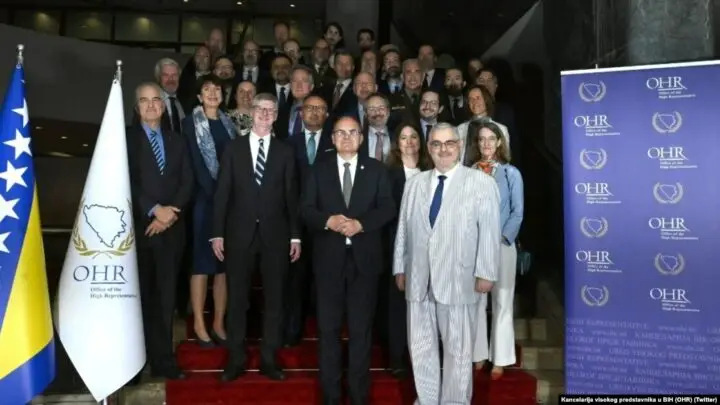
Outgoing High Representative Christian Schmidt confirms structural consultations will continue through June, with Washington and European capitals split over the future use of the OHR’s sweeping “Bonn Powers.”
The Peace Implementation Council (PIC) failed to reach a consensus on appointing a new High Representative for Bosnia and Herzegovina during a contentious ambassadorial session in Sarajevo on Thursday.
Despite the immediate structural deadlock, outgoing High Representative Christian Schmidt issued a video address attempting to project institutional stability. Schmidt emphasized that despite differing opinions on the ideal successor, there remains an unyielding, unified consensus among major international stakeholders regarding the vital necessity and continuity of the Office of the High Representative (OHR).
The diplomatic clock is ticking fast. Schmidt announced a tight operational window to break the stalemate:
“These consultations will continue throughout June,” Schmidt stated. “All participants hope that a candidate for this position will be selected by consensus in the coming days, with the explicit goal of executing the official handover of duties by June 30.”
The Unfinished ‘5+2’ Mandate
The incoming diplomat will face the challenging task of overseeing the implementation of the 1995 Dayton Peace Agreement and guiding Bosnian institutions through the highly selective “5+2” Agenda—the formal set of requirements that must be fully realized before the OHR can be dissolved.
┌────────────────────────────────────────────────────────────────────────┐
│               The '5+2' Agenda Implementation Status                   │
├───────────────────────────────────────┬────────────────────────────────┤
│ OBJECTIVE                             │ CURRENT STATUS                 │
├───────────────────────────────────────┼────────────────────────────────┤
│ 1. Stabilization & Association Pact   │ COMPLETED (Signed 2008)        │
├───────────────────────────────────────┼────────────────────────────────┤
│ 2. Brčko District Final Status        │ COMPLETED (Constitutional      │
│                                       │ Amendment 2009)                │
├───────────────────────────────────────┼────────────────────────────────┤
│ 3. State & Military Property Division │ UNRESOLVED / STALEMATED        │
├───────────────────────────────────────┼────────────────────────────────┤
│ 4. Fiscal Sustainability of the State │ PARTIALLY MET                  │
├───────────────────────────────────────┼────────────────────────────────┤
│ 5. Hardening the Rule of Law          │ PARTIALLY MET                  │
└───────────────────────────────────────┴────────────────────────────────┘
Schmidt, who surprised the region in April by announcing his resignation after five years in office, reiterated that he will not abandon his post until a successor is locked in. He underscored that “maintaining institutional continuity” is crucial as Bosnia navigates a tense political landscape ahead of its high-stakes general elections scheduled for October.
A Tale of Two Candidates: Rome vs. Paris
The current diplomatic gridlock inside the PIC Steering Board centers on a direct competition between two prominent European diplomats:
- The U.S. Choice: Antonio Zanardi Landi (Italy): A 76-year-old veteran diplomat with deep regional expertise, having previously served as Italy’s Ambassador to Serbia and Montenegro, as well as Russia. His candidacy is backed by a powerful lobbying effort from Washington.
- The French Choice: René Troccaz (France): Currently serving as France’s Special Envoy for the Western Balkans, Troccaz enjoys the strong backing of Paris and a coalition of continental European states.
The Geopolitical Divide: Overhauling the ‘Bonn Powers’
The disagreement is about more than just a clash of names; it reflects a deep, fundamental rift over the OHR’s long-term executive role.
A European bloc comprising Great Britain, France, and Germany wants to maintain the current, robust OHR model. This framework grants the High Representative the sweeping “Bonn Powers”—allowing the diplomat to unilaterally impose laws and summarily remove elected officials who cause institutional blockades or violate the Dayton Agreement.
Conversely, the United States administration in Washington is pushing for a strategic shift. The U.S. favors a gradual reduction of the OHR’s interventionist role, arguing that long-term stability requires transferring more legislative responsibility directly to local, democratically elected Bosnian politicians.
Adding to the complexity is the total boycott by Moscow. Russia formally suspended its participation in the PIC in 2022 and—aligned with the leadership of the Serb-dominated entity Republika Srpska—demands the total and immediate closure of the OHR.
Because the head of the OHR cannot enact policy or take office without a unified consensus within the PIC Steering Board followed by a formal confirmation vote in the UN Security Council, the coming weeks will require intense diplomatic bargaining between Washington, Paris, and London to prevent an absolute leadership vacuum on July 1.