Serbia’s Higher Public Prosecutor’s Office in Kruševac has decided not to initiate criminal proceedings over posters carrying the message, “Remember Gazimestan, don’t buy from Albanians,” concluding that there are no legal grounds to pursue the case ex officio.
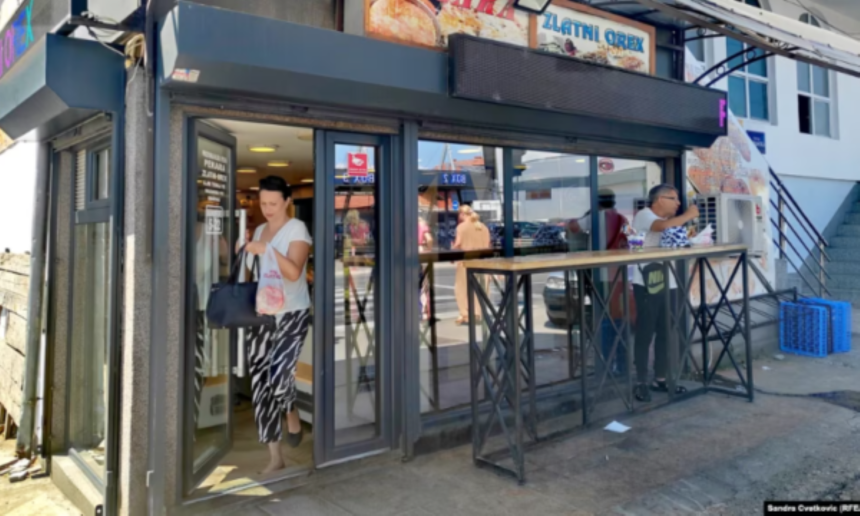
The discriminatory posters appeared in early July near a bakery in Kruševac, central Serbia, owned by an ethnic Albanian.
In a written response to Radio Free Europe/Radio Liberty (RFE/RL), the prosecutor’s office said police inspected bakeries and surrounding areas known to be owned by Albanian citizens. During the investigation, officers found a sticker bearing the slogan attached to a utility pole near the bakery owned by T.I., a resident of Kruševac.
Police also interviewed the bakery owner as part of the inquiry.
“Following an analysis of the collected information, the Higher Public Prosecutor’s Office in Kruševac concluded that there are no elements to initiate criminal proceedings for any offense prosecuted ex officio,” the prosecution said.
The City of Kruševac had previously condemned the appearance of the posters, describing them as discriminatory and stressing that the municipality opposes all forms of hate speech, discrimination and incitement to division.
Local authorities emphasized that Kruševac has traditionally been a safe and welcoming city for all residents, regardless of their ethnic background, as well as for visitors and those who choose to live and work there.
The municipality also called on state authorities to identify those responsible, fully investigate the incident and determine the motives behind the distribution of the posters.
The case comes amid heightened tensions following events on June 28, when Kosovo Police detained 37 people during Vidovdan commemorations at Gazimestan near Pristina. Thirty-six of those detained, most of them Serbian citizens and nationals from neighboring countries, were later fined, expelled from Kosovo and banned from re-entering for three years after chanting “Kosovo is Serbia” and displaying the three-finger salute.
According to the Basic Court in Pristina, the slogans and gestures were classified as nationalist messages that violated public order.