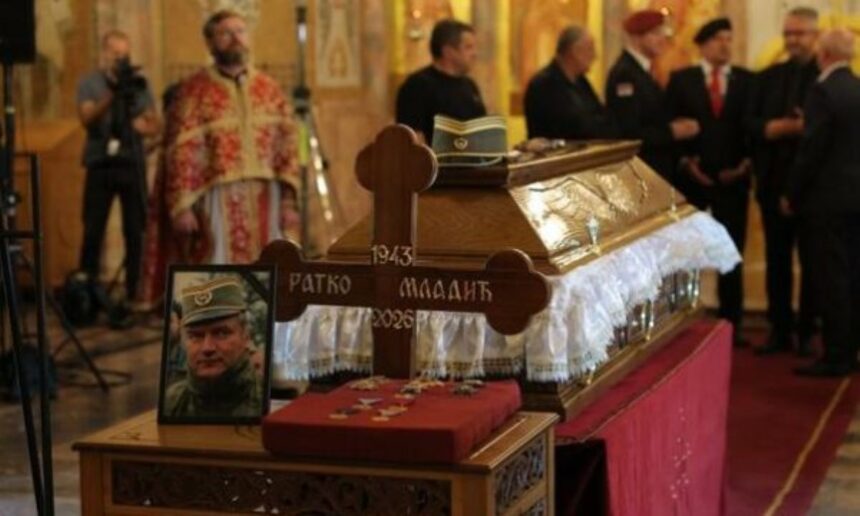
Three senior U.S. lawmakers have warned Serbia and Republika Srpska against honoring or glorifying former Bosnian Serb military commander Ratko Mladić ahead of his funeral, stressing his conviction for genocide and other war crimes.
The statement was issued by Senator Jeanne Shaheen, the senior Democrat on the Senate Foreign Relations Committee; Senator Chuck Grassley, chairman of the Senate Judiciary Committee; and Representative Keith Self, chairman of the House Foreign Affairs Subcommittee on Europe.
“Ratko Mladić was a war criminal and architect of the Srebrenica genocide, in which more than 8,000 Bosniak men and boys were killed,” the lawmakers said.
They also pointed to the nearly four-year siege of Sarajevo, describing Mladić’s forces as responsible for some of the most inhumane crimes committed on European soil since World War II.
The lawmakers said any official commemoration or praise for Mladić would dishonor the memory of his victims and insult a region that continues to live with the consequences of his campaign of ethnic cleansing.
They expressed particular concern over Serbia’s announcement that Mladić would receive state and military honors at his funeral, as well as comments by Republika Srpska President Milorad Dodik, who described Mladić as a “Serbian freedom fighter.”
Ahead of Monday’s funeral, the U.S. lawmakers called on the governments of Serbia and Republika Srpska to distance themselves from the planned ceremonies and ensure that no public statement or official act portrays Mladić as anything other than a convicted architect of genocide.
The lawmakers framed the coming days as a test of whether Serbia and Republika Srpska are prepared to confront their wartime past and pursue closer integration with the European Union and the Euro-Atlantic community.
“The days ahead will be a test of the willingness of Serbia and Republika Srpska to break with the past and begin the path toward EU membership and Euro-Atlantic integration, or to allow the past to once again obstruct a better future for their citizens,” they said.
Mladić was convicted of genocide, crimes against humanity and war crimes by the International Criminal Tribunal for the former Yugoslavia and sentenced to life imprisonment. His conviction was upheld on appeal in 2021.
His death and the decision to bury him in Serbia with state and military honors have reignited debate across the region over the legacy of the Bosnian war, accountability for wartime crimes and the continuing political glorification of convicted war criminals.