
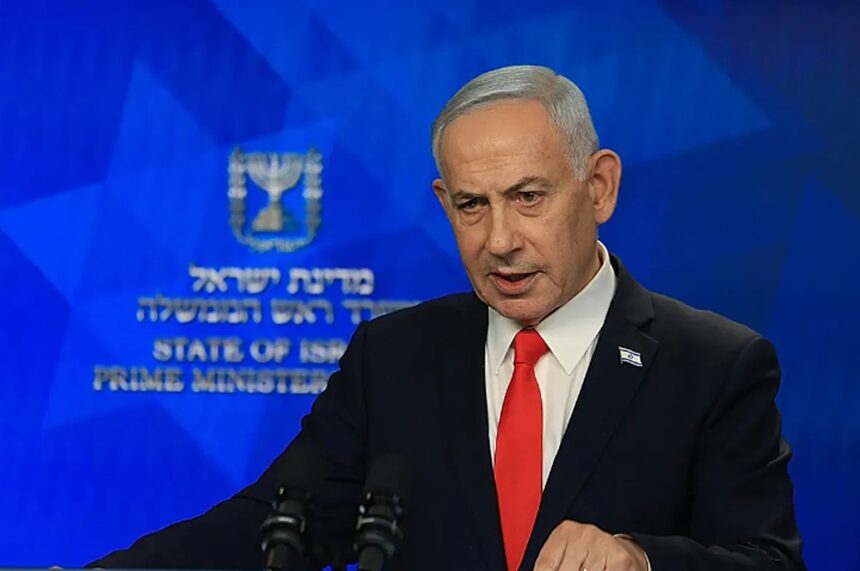
Israeli Prime Minister Benjamin Netanyahu has denied that Qatar influenced Israel’s decision-making during the war in Gaza, describing it as a “hostile state.”
In an interview with i24NEWS, Netanyahu said Qatar had not dictated any of the Israeli government’s decisions.
“Qatar is a hostile state, but Qatar is not a state that has dictated anything here,” he said.
Netanyahu also referred to Israel’s attack on Doha in September 2025, which targeted senior Hamas officials who were in Qatar as part of negotiations over a U.S.-backed proposal for a ceasefire in Gaza.
“I attacked Qatar – I even bombed it,” Netanyahu said.
Six people were killed in the attack, including a member of Qatar’s security forces, while Hamas said its senior negotiating team had survived. Qatar condemned the attack as a violation of its sovereignty.
Later, during a phone call with U.S. President Donald Trump and the Qatari prime minister, Netanyahu apologized for the attack and pledged that such an action would not be repeated.
Netanyahu Defends Transfer of Qatari Funds to Gaza
Netanyahu’s latest comments came as he defended the decision to allow the transfer of funds from Qatar to Gaza prior to the Hamas attacks of October 7, 2023.
According to Netanyahu, the funds were intended for humanitarian purposes, and the transfers had been recommended by Israeli security agencies.
Qatar has repeatedly denied financing Hamas, arguing that aid for Palestinians in Gaza was delivered through mechanisms known to Israel and the United States.
So far, Doha has not publicly responded to the Israeli prime minister’s latest remarks.
Qatar and Iran Clash Over Attacks
Netanyahu’s comments come at a time when Qatar and Iran have become embroiled in a diplomatic dispute over missile and drone attacks targeting Qatari territory.
Qatar’s Foreign Ministry spokesperson, Majed Al Ansari, accused Tehran on Friday of selectively using a Qatari security document to support its claim that the Iranian attacks primarily targeted U.S. military facilities.
Iranian Foreign Ministry spokesperson Esmaeil Baghaei had cited a Qatari security assessment prepared for the International Telecommunication Union, claiming that the Iranian attacks were directed almost entirely at U.S. facilities rather than civilian areas.
Qatar rejected this interpretation, saying the document had been taken out of context.
Al Ansari said documents officially submitted by Qatar to the United Nations demonstrate that Iranian missiles had passed over civilian, commercial, and residential areas, while previous attacks had caused damage and injuries.
He also rejected Iran’s claim that the attack on gas facilities in Ras Laffan was merely “alleged,” saying the incident had been officially documented by Qatar.
“Qatar is not a party to this conflict,” Al Ansari said, adding that attacks on the country’s territory and civilian infrastructure cannot be justified as a legitimate response.
Qatar has sent letters to the UN Secretary-General and the president of the Security Council, rejecting Iran’s legal justification for the attacks that began on February 28.
Doha has stated that Iran bears responsibility under international law and that Qatar reserves the right to defend itself and seek compensation for the damage caused.
Meanwhile, Qatari authorities have said they will continue diplomatic efforts to reduce tensions in the region.