Serbia’s Organized Crime Prosecutor’s Office (TOK) has questioned more than 10 prosecutors and Justice Minister Nenad Vujić as part of an investigation into allegations that the Security Intelligence Agency (BIA) interfered in elections for the High Council of Prosecutors (VST).
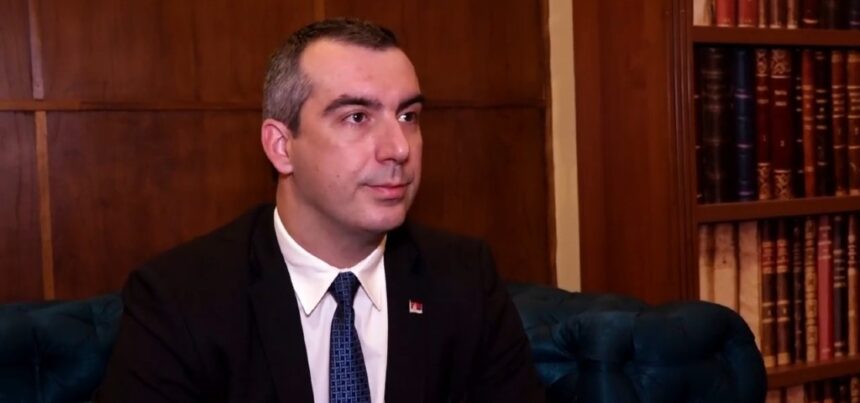
However, BIA Director Vladimir Orlić has not yet been questioned, with prosecutors telling investigative outlet KRIK that the conditions for interviewing him have not been met.
The investigation stems from allegations that prosecutors were summoned to BIA headquarters earlier this year and instructed how and for whom to vote in elections for the VST, the body responsible for key decisions concerning Serbia’s public prosecutors.
Republican Public Prosecutor Zagorka Dolovac publicly raised the issue in February during a session of the VST, saying she had learned that a meeting involving BIA and prosecutors had taken place and subsequently confirmed the information.
According to KRIK, the information presented by Dolovac was included in a criminal complaint that prompted TOK to launch its investigation.
Prosecutors questioned, BIA director not yet called
TOK told KRIK that it has so far questioned the chief public prosecutors of all four appellate prosecution offices — in Belgrade, Novi Sad, Niš and Kragujevac — as well as prosecutors from higher prosecution offices in Požarevac, Novi Pazar, Kragujevac, Kraljevo and Kruševac.
The office also questioned the Supreme Public Prosecutor and a prosecutor from that institution, as well as Justice Minister Nenad Vujić.
Orlić, however, has not been summoned for questioning.
TOK said it had sent a formal request to BIA seeking information relevant to the investigation, but that the agency had failed to provide the requested material despite repeated reminders.
“Given that the requested information from BIA has still not been delivered to the prosecution despite several reminders, the conditions for questioning BIA Director Vladimir Orlić have not been met,” TOK said in its response to KRIK.
The lack of cooperation from the intelligence agency has therefore become a key obstacle to questioning its director.
Alleged interference in VST elections
The High Council of Prosecutors elections were initially held in December, but voting was repeated at four polling stations in February after the VST failed to decide within the statutory deadline on complaints filed by prosecutors Miodrag Surla, Dušica Jelić and Jelena Sučević, who alleged irregularities in the electoral process.
According to allegations contained in the criminal complaint, some prosecutors were summoned to BIA headquarters shortly before the repeat vote and allegedly instructed how to vote.
Surla said at a February VST session that a meeting had been held at BIA headquarters in late January attended by Orlić and several chief prosecutors from higher and basic prosecution offices in the Kragujevac appellate area.
The prosecutors who allegedly attended the meeting are said to have subsequently organized meetings within their own prosecution offices, where they passed on the message they had received from BIA.
Candidates associated with the faction aligned with Belgrade Higher Public Prosecutor Nenad Stefanović subsequently won the repeat elections.
Why the VST elections matter
The High Council of Prosecutors has 11 members. Five are elected from among public prosecutors, four are chosen by parliament from among prominent legal experts, while the justice minister and supreme public prosecutor are members by virtue of their positions.
The council has authority over the selection, promotion, disciplinary responsibility and dismissal of public prosecutors and is formally intended to safeguard prosecutorial independence from executive pressure.
That makes the alleged BIA involvement particularly significant.
The investigation comes amid a long-running power struggle within Serbia’s prosecution system, with Dolovac and Stefanović representing opposing factions.
Stefanović has previously accused Dolovac and VST President Branko Stamenković of having exercised “absolute power” over Serbia’s public prosecution system for years.
The allegations now being investigated raise a broader question about whether Serbia’s intelligence apparatus was used to influence the composition of the body responsible for protecting prosecutorial independence.
Until BIA provides the information requested by prosecutors, however, the investigation faces a significant evidentiary gap — and its director remains outside the questioning process.