The peace process aimed at ending Russia’s war against Ukraine has reached a deep impasse, with growing pressure on Kyiv to make concessions while Moscow continues pursuing its territorial and strategic objectives, according to an analysis published by CNN.
The article describes two parallel diplomatic efforts unfolding around US President Donald Trump. European allies and Ukraine are attempting to turn Washington’s demands and threats into a peace plan acceptable to Trump, while the Kremlin is offering business opportunities designed to appeal to his commercial instincts and draw him closer to Moscow.
Trump’s envoys, Steve Witkoff and Jared Kushner, are moving between the two diplomatic tracks, but the efforts remain disconnected, with no clear breakthrough in sight.
Moscow’s vision of peace amounts to victory
According to CNN, the central obstacle to a settlement is that Russia’s vision of peace largely amounts to victory on its own terms.
Russian President Vladimir Putin wants Ukraine to surrender the remaining parts of the Donbas under Kyiv’s control without further fighting. Moscow has also long demanded Ukraine’s demilitarisation, a commitment never to join NATO, and changes to the country’s leadership — conditions the article describes as impractical or impossible to accept during wartime.
For now, the Kremlin appears to be concentrating on the Donbas as its most attainable negotiating objective, while pressure on Kyiv to make territorial concessions continues to grow.
The question of why Ukrainian President Volodymyr Zelensky should refuse to surrender the region has become increasingly difficult as the remaining Ukrainian-held areas face mounting destruction.
Russian drones are reportedly pursuing people in Kramatorsk, the largest population centre in the area, while Sloviansk, Dobropillia and Kostiantynivka have been heavily damaged or remain targets of Russian glide bombs. Although these cities retain considerable military importance, civilian life has been severely disrupted.
Rubio warns of the strategic consequences of abandoning Donbas
One of the strongest arguments against Ukraine surrendering the region has come from US Secretary of State Marco Rubio, whom CNN describes as a key figure in Trump’s administration and a potential successor to the president.
Speaking to Breitbart News, Rubio said Russia controlled all but 11 per cent of the Donetsk region. Ukraine considers the remaining territory a critical defensive line that its forces have spent years fortifying.
Rubio said military strategists believed the position was the last defensible line, warning that abandoning it could leave the route towards Kyiv exposed.
He also argued that Russia was not making meaningful progress on the battlefield and had consequently intensified attacks on Ukrainian civilians and infrastructure through drones, ballistic missiles and strikes on the country’s energy system.
Ukraine, meanwhile, has continued striking Russian oil refineries.
Rubio acknowledged the efforts of Witkoff and Kushner to negotiate an end to the war, but stressed that Washington had other global priorities.
“We would like the war to end, but ultimately we also have other priorities around the world that we are focused on,” he said, according to the analysis.
Rubio’s 45-minute phone conversation with Zelensky on Tuesday suggested that he may be more engaged in the negotiations than his public remarks indicated. Nevertheless, CNN argues that his relatively low expectations reflect the fundamental divide between the two sides: Ukraine is fighting for survival, while Russia continues to pursue victory.
CNN questions the concessions Trump has made to Moscow
The analysis asks whether the latest period of intense US-Ukrainian diplomacy has brought Trump any closer to the peace agreement he says he wants.
CNN argues that Trump has offered Moscow a series of unexpected concessions and incentives without clearly defining the terms of the settlement he is seeking.
Among the measures highlighted in the article are:
- A diesel-related arrangement that CNN says could channel billions of dollars into Russia’s war finances, although its actual economic impact remains uncertain.
- A proposed energy ceasefire, announced unilaterally by Trump, which reportedly slowed Ukrainian attacks on Russian oil refineries for several days.
- Restrictions affecting Starlink, which CNN says disrupted Ukraine’s defensive and offensive operations.
- Limits on intelligence-sharing, which allegedly left Ukraine without warnings of ballistic missile attacks for at least several nights.
- Repeated calls for Zelensky to leave office, alongside a months-long interruption in US financial support for Ukraine, with Europe increasingly financing military assistance.
The article argues that the combined effect of these measures has been to benefit Putin, even as Washington claims to be working towards peace.
Zelensky seeks renewed US support
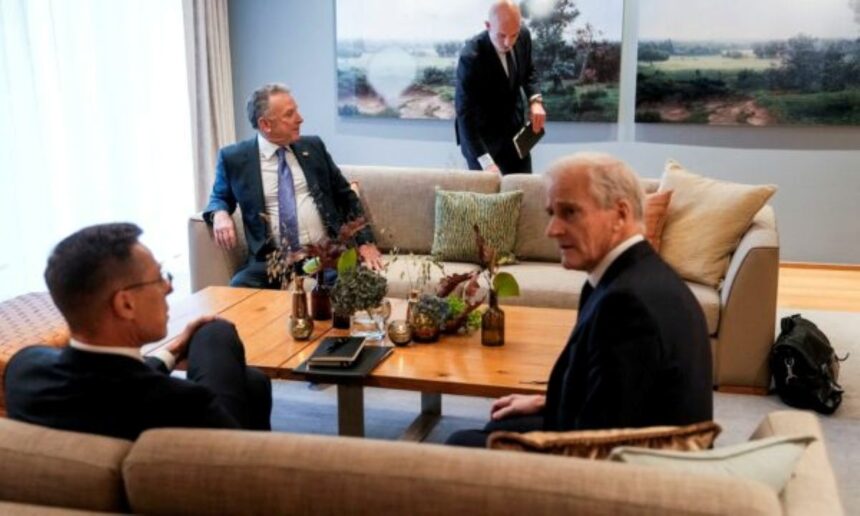
Speaking at a news conference in Oslo after meeting Witkoff in person and Kushner virtually, Zelensky said he hoped to receive positive news from Rubio soon regarding the US Patriot air defence system and Starlink.
He also expressed gratitude that intelligence-sharing with the United States was now functioning again.
Witkoff was expected to travel to Russia the following day, although it remained unclear what proposals he would present to Putin.
CNN notes that the shifting nature of restrictions on Starlink, Starshield — the military version of Starlink controlled by the US government — and intelligence cooperation has created uncertainty for Ukrainian forces. The article also points to Rubio’s repetition of Trump’s denials that some of these restrictions had existed.
The publication argues that the inconsistency of these measures has further undermined the credibility of the US administration’s approach.
US domestic politics may explain Trump’s strategy
CNN suggests that Trump’s actions may be better understood through the lens of American domestic politics, particularly the approaching midterm elections.
The analysis argues that the political damage Trump is inflicting on himself and fellow Republicans is becoming increasingly apparent, with some Republicans seeking to distance themselves from policies they regard as excessively favourable to Russia.
It also questions the practical effectiveness of several measures. The diesel arrangement is unlikely to bring down US fuel prices quickly, the article argues, while European restrictions could limit the revenue Russia receives. The proposed energy ceasefire was short-lived, and the uncertainty surrounding military technology and intelligence-sharing has complicated Ukraine’s position.
According to CNN, this confusing series of decisions may be intended to shape the political landscape beyond the midterm elections.
Ukraine and Europe prepare for a future with less US support
The analysis concludes that Ukraine has increasingly accepted the possibility that it may have to continue fighting with substantially less American assistance.
Rather than continuing to rely on winning Trump’s favour, Kyiv is preparing for the possibility of having to stand more independently, with survival taking precedence over maintaining a close relationship with an unpredictable Washington.
Europe, meanwhile, recognises that the period in which Trump can significantly affect the course of the war may be limited. CNN argues that the continent and Ukraine are using the time available to prepare for a future in which they may have to shoulder more of the burden themselves.
The article’s most troubling question concerns Trump’s motivations. CNN argues that his approach risks damaging both his political legacy and his party, while offering uncertain prospects for a peace settlement.
With Republicans still controlling both chambers of Congress and the 2028 presidential succession race not yet fully underway, the analysis suggests Trump may view this period as an opportunity to pursue his apparent affinity for Putin with fewer domestic political constraints.
Ultimately, CNN portrays the peace process as two competing efforts with fundamentally incompatible objectives: Ukraine is seeking to preserve its sovereignty and survive the war, while Russia continues to believe it can secure victory.