The Serbian Orthodox Church has announced that a memorial service will be held today for former Bosnian Serb Army commander Ratko Mladić, who was sentenced to life imprisonment for genocide, crimes against humanity and war crimes committed during the 1992–1995 war in Bosnia and Herzegovina.
In its official announcement, the Serbian Orthodox Church described Mladić as “an Orthodox Christian and Serbian soldier” and said the service would begin at noon at the Church of the Holy Apostle and Evangelist Luke in Košutnjak, Belgrade.
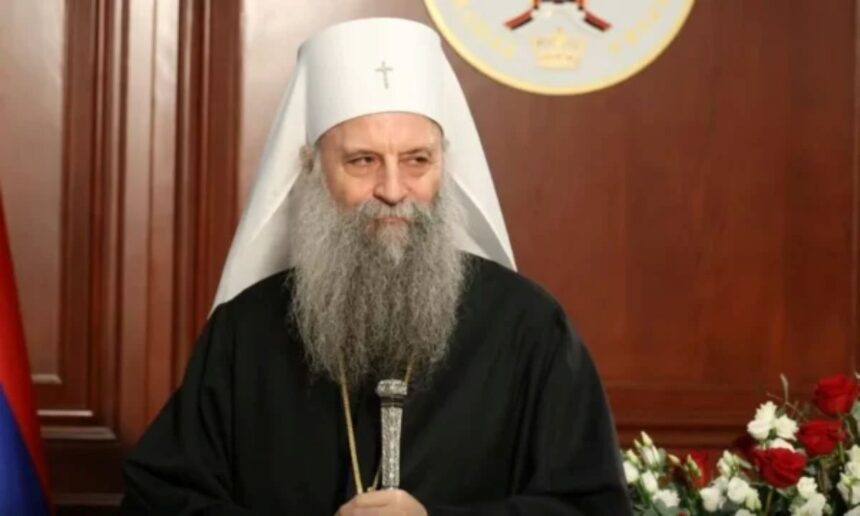
Several Belgrade media outlets have reported that Serbian Orthodox Patriarch Porfirije is expected to lead the service, although the church’s official announcement did not explicitly confirm his participation.
Following the service, Mladić is expected to be buried at Topčider Cemetery in Belgrade.
Mladić died in The Hague on August 27 at the age of 84 while serving his life sentence.
In 2017, the International Criminal Tribunal for the former Yugoslavia found him guilty of genocide in Srebrenica, crimes against humanity and war crimes committed during the Bosnian war. His conviction and life sentence were upheld on appeal in 2021.
His body was transported from The Hague to Belgrade aboard a Serbian government aircraft. His coffin was received with military honors, prompting strong condemnation from survivors and victims’ families in Bosnia and Herzegovina, as well as criticism from European officials.
Survivors’ groups and relatives of those killed in the war have strongly opposed any state or military honors for Mladić, who was held responsible by the international tribunal for some of the conflict’s most serious crimes.
Mladić commanded the Army of Republika Srpska during the Bosnian war. The tribunal found him responsible, among other crimes, for the July 1995 Srebrenica genocide, in which more than 8,000 Bosniak men and boys were killed, as well as crimes committed during the siege of Sarajevo.
The controversy surrounding the treatment of Mladić after his death has also affected Serbia’s relationship with the European Union.
European Commissioner for Enlargement Marta Kos canceled a planned visit to Serbia, saying the glorification surrounding Mladić’s death was incompatible with the values underpinning the country’s path toward EU membership.
Kos stressed that Serbia’s European path requires confronting the past, genuine reconciliation and respect for victims of war crimes.
Despite the rulings of international courts, Mladić continues to be glorified by parts of nationalist circles in Serbia and Republika Srpska, a practice that has for years drawn condemnation from victims’ families and international organizations.