
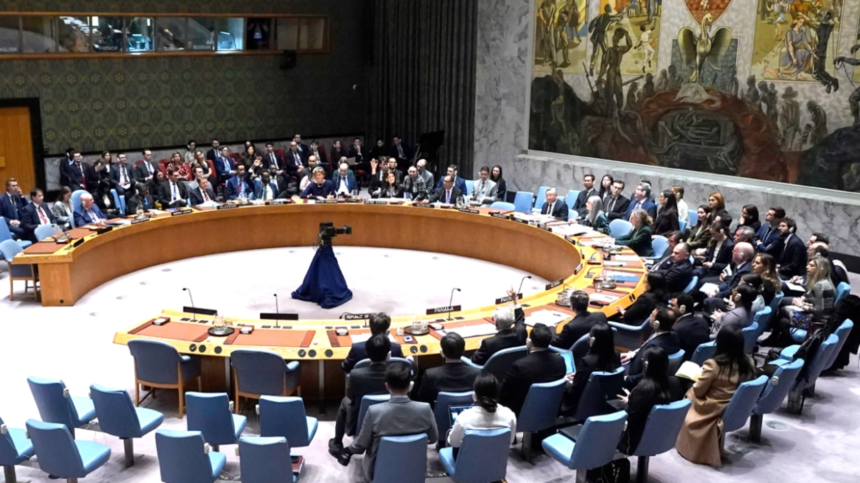
Political analyst Gani Qarri has called for international pressure on Serbia to take responsibility for crimes committed during the Kosovo war and the 2023 Banjska attack, following Kosovo Foreign Minister Glauk Konjufca’s address to the United Nations Security Council.
Speaking to Bota Sot, Qarri praised Konjufca’s performance at Tuesday’s meeting, saying he had represented Kosovo with dignity and delivered important messages concerning Serbia’s responsibility, the rights of victims and Kosovo’s aspiration to become a member of the United Nations.
Qarri said Konjufca had reminded the international community of the crimes committed against Kosovo Albanians during the war, while outlining Kosovo’s positions on current political and security developments, the country’s progress and the challenges it continues to face.
He particularly highlighted Konjufca’s reference to more than 12,000 civilians killed during the war and 1,577 missing persons, including 109 children whose remains have yet to be found.
According to Qarri, Konjufca’s address was substantive and supported by documented evidence, reinforcing the need for accountability and international action.
Calls for accountability over the Banjska attack
Qarri also welcomed Konjufca’s demand that those responsible for the September 2023 attack in Banjska be brought to justice, specifically naming Milan Radoičić, who claimed responsibility for organising the armed group involved in the attack.
He described the incident as an attempted territorial incursion allegedly encouraged by Serbia and recalled that Kosovo Police officer Afrim Bunjaku was killed during the attack.
Qarri argued that Radoičić and those who supported the operation should face justice, criticising the fact that Radoičić remains at liberty in Serbia.
He also welcomed Konjufca’s rejection of the latest UNMIK report on Kosovo, which the analyst considers influenced by Serbian propaganda. Qarri reiterated his support for Kosovo’s recognition as an independent state and its admission to the United Nations as a full member.
He said the messages delivered at the Security Council meeting should be followed by concrete measures from the international community, including direct pressure on Serbia to change its approach towards Kosovo, return the remains of killed and abducted Albanians, and recognise Kosovo’s independence.
Qarri argued that such steps would contribute to political stability and lasting peace in the Western Balkans.
Qarri criticises Kosovo’s opposition over institutional blockages
The analyst also criticised Kosovo’s domestic political leadership, arguing that Serbia was not solely responsible for Kosovo’s difficulties in advancing its international position.
According to Qarri, political disputes, institutional deadlocks and opposition-led blockages had prevented Kosovo from fully exploiting opportunities to strengthen its international standing.
He pointed to developments following Russia’s invasion of Ukraine and the prolonged student protests in Serbia, arguing that these events had created opportunities for Kosovo to advance its diplomatic objectives.
Qarri said greater coordination between political parties and the government could have helped Kosovo secure additional international recognitions and make progress towards membership in international organisations, including the EU, NATO and the United Nations.
He expressed concern over renewed political tensions surrounding amendments to the law governing Kosovo’s Specialist Chambers and warned that threats of unrest could undermine institutional stability.
Qarri argued that political cooperation, rather than confrontation, was necessary to strengthen Kosovo’s statehood and international position.
Serbia’s EU accession process under scrutiny
Qarri also addressed Serbia’s relationship with the European Union, arguing that Belgrade’s refusal to align with EU sanctions against Russia, its granting of citizenship to sanctioned Russian oligarchs, and concerns over the rule of law had contributed to stagnation in its EU accession process.
He said Serbia had once been considered among the leading candidates for EU membership but had made little progress in negotiations in recent years.
Qarri also referred to Serbia’s upcoming elections on October 25, suggesting that the prolonged student-led protest movement could pose a serious challenge to President Aleksandar Vučić’s political dominance.
He argued that the outcome could have implications for Serbia’s domestic political direction and, indirectly, for the wider regional balance.
Concluding his remarks, Qarri called for a more unified political approach in Kosovo, saying coordinated domestic action and sustained international engagement were essential to advancing Kosovo’s recognition, strengthening its institutions and securing long-term stability in the Western Balkans.