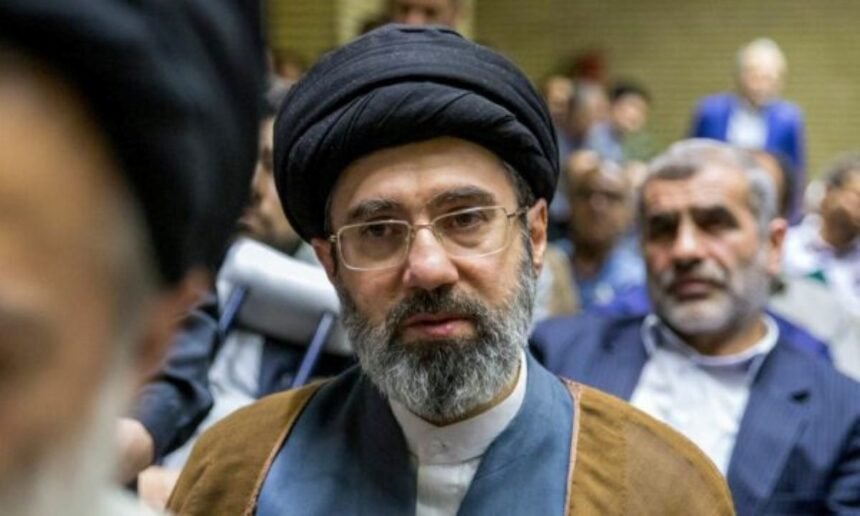
As Iran finalizes an unprecedented security operation for the historic, multi-day state funeral of late Supreme Leader Ayatollah Ali Khamenei, a critical question hangs over the Islamic Republic: Will his son and successor, the newly appointed Supreme Leader Mojtaba Khamenei, appear in public to lead the funeral prayers?
The late Ayatollah Ali Khamenei was killed more than four months ago on February 28, during a combined U.S. and Israeli airstrike on the first day of the war. The highly anticipated public funeral processions are scheduled to begin this Saturday, July 4, 2026, in Tehran, and will conclude with his burial on July 9 at the holy shrine of Imam Reza in his birthplace of Mashhad. Officials anticipate between 15 to 20 million mourners, potentially making it the largest state funeral in modern Iranian history.
The Veil of Secrecy Surrounding Mojtaba
Mojtaba Khamenei is widely believed to have been severely wounded in the very same airstrike that claimed his father’s life—an attack that also killed his mother and his wife.
Since assuming office following his father’s assassination, Mojtaba has remained entirely in hiding. Throughout the ongoing conflict, his leadership has been marked by total physical absence:
- He has communicated with state officials and loyalists exclusively through written directives.
- He has never appeared on television or broadcasted his voice since taking power.
- On Wednesday, he fueled internal speculation by failing to attend a private, highly restricted memorial service held for his late wife.
While state media and Iranian diplomats have actively tried to project an image of a fully recovered leader—even claiming Mojtaba is personally orchestrating Teheran’s indirect diplomatic negotiations with Washington in Doha—the total lack of visual proof has amplified internal skepticism.
A Critical Dilemma: Legitimacy vs. Absolute Risk
For the new regime, Mojtaba’s presence at the funeral carries immense geopolitical weight. Step-by-step traditions dictate that the incoming Supreme Leader must lead the final prayers over his predecessor’s casket to solidify his domestic legitimacy and divine authority before the public and the powerful Islamic Revolutionary Guard Corps (IRGC).
          [MOJTABA KHAMENEI'S FUNERAL DILEMMA]
                           │
         ┌─────────────────┴─────────────────┐
         ▼                                   ▼
 [PROS FOR APPEARING]               [CONS FOR APPEARING]
 ────────────────────               ────────────────────
 • Projects state stability         • Extreme vulnerability to strikes
 • Solidifies new authority         • Confirms/denies severe injuries
 • Unifies clerical factions        • Defies IRGC security protocols
However, the security risks are astronomical. Just this Wednesday, Israeli Defense Minister Israel Katz publicly declared that Mojtaba Khamenei is actively “marked for death.” Following the threat, Iranian Foreign Minister Abbas Araqchi fired back, warning of an “immediate and powerful response” to any aggression targeting Tehran’s leadership.
To mitigate threats, Iran’s Civil Aviation Organization announced temporary airspace restrictions over Tehran and Mashhad, while military units plan to deploy heavy security cordons and helicopters to monitor crowd surges.
The Cost of Absence
If Mojtaba fails to step into the public eye by Saturday, the Islamic Republic will almost certainly frame his absence as a calculated, mandatory wartime security protocol.
Nevertheless, skipping his father’s final rites will deeply compromise his standing. A second consecutive public absence will validate Western intelligence reports regarding the severity of his physical injuries and spark intense domestic questions over who is truly running the government and controlling the armed forces from behind closed doors.
When explicitly cornered by reporters this week regarding whether Mojtaba would appear, Ali Akbar Pourjamshidian, the head of the state funeral organizing committee, completely deflected the question.
“This matter is not within our domain,” Pourjamshidian stated. “The decision lies entirely within the office of the Supreme Leader.”