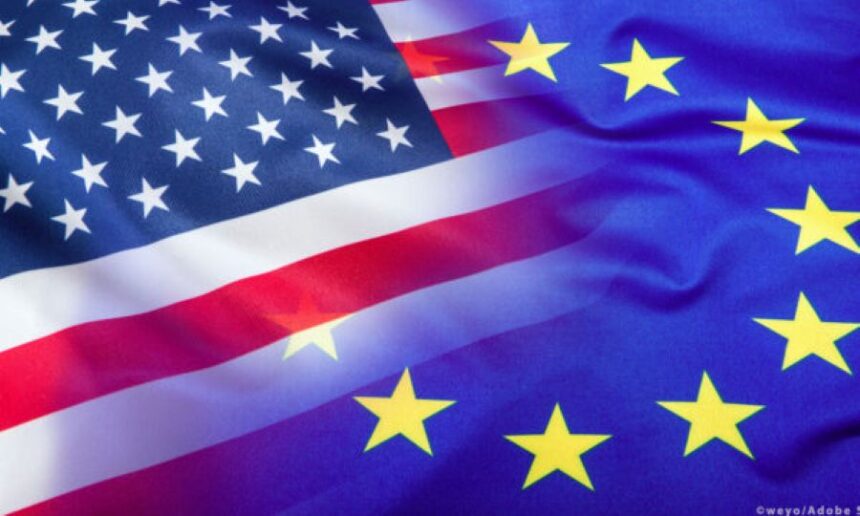
European and American leaders gathered for the Munich Security Conference on Friday, confronting growing divisions within the transatlantic alliance. German Chancellor Friedrich Merz warned that the international order “no longer exists”, highlighting one of the few areas of consensus among allied nations.
In his speech at the conference, which brings together officials from around the world to discuss international security and diplomatic engagement, Merz emphasized that Europe’s freedom is no longer guaranteed in an era where major powers disregard international rules. He condemned Russia’s aggressive war against Ukraine and urged Europe to strengthen its own preventive capabilities. Merz also criticized the Trump administration for its policies on tariffs, climate change, and cultural conflicts—comments likely to draw attention in Washington.
Meanwhile, the U.S. administration appears aligned on the broader view that the previous world order has ended. U.S. Secretary of State Marco Rubio stated Thursday evening, ahead of the conference, that “the old world is gone, frankly” and that the world is entering a new era of geopolitics. Rubio added, “This will require all of us to rethink what this new era looks like and what our role will be,” emphasizing Europe’s importance to the United States.
Merz acknowledged the open rift between Europe and the U.S., noting that claims of American leadership have been challenged and perhaps diminished.
Addressing the transatlantic divide, Merz contrasted his remarks with last year’s confrontational speech by U.S. Vice President JD Vance, who had criticized European politicians for suppressing free speech, failing to control immigration, and refusing to cooperate with right-wing parties. Merz clarified: “The MAGA culture war in the U.S. is not ours. Freedom of expression here ends where words target human dignity and our fundamental law.”
He reiterated Germany’s commitment to free trade, global climate agreements, and cooperation through the World Health Organization, underscoring that global challenges must be solved collectively.
Merz also issued a direct message to U.S. leadership in English: “In the era of great power rivalry, even the United States will not be strong enough to act alone. NATO membership is not just a competitive advantage for Europe, but also for the United States.”
During the conference, Merz is scheduled for bilateral meetings with Rubio and Ukrainian President Volodymyr Zelensky.
The Munich forum comes weeks after another tense gathering in Davos, where former President Trump criticized European leaders for migration policies and complained that the U.S. had been exploited by European allies.