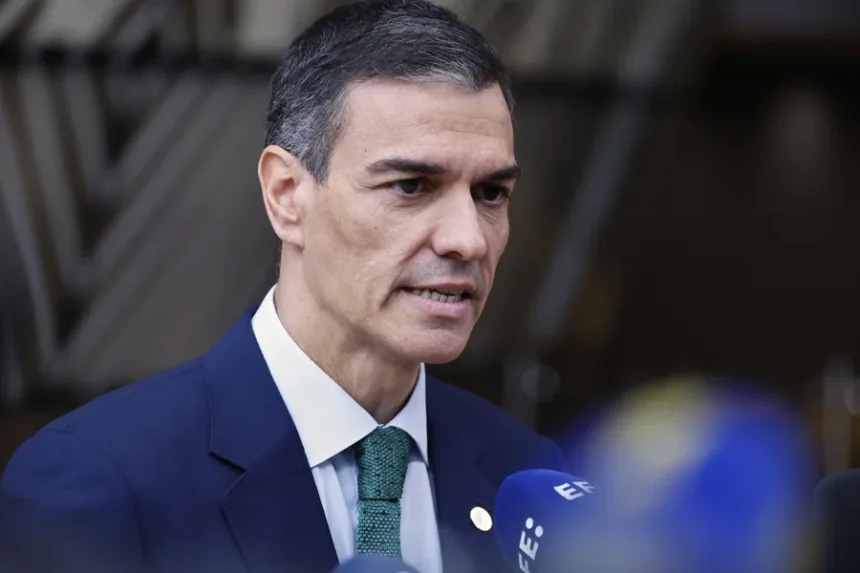
The Spanish government has approved a new royal decree that will grant legal status to more than 500,000 undocumented immigrants currently living in the country, according to the Spain Council of Ministers.
The measure, backed by Prime Minister Pedro Sánchez, is part of a broader policy response to Spain’s demographic decline and growing demand for labor across key sectors such as agriculture, elderly care, and public services.
Sánchez defended the decision, stating that many migrants already contribute to Spanish society and the economy, and arguing that regularizing their status is both a moral and economic necessity. He warned that without sustained immigration, Spain’s aging population could place increasing pressure on healthcare, pensions, and education systems.
Under the decree, individuals who can prove residence in Spain for at least five months prior to January 1, 2026, and who demonstrate employment or family ties, may qualify for legal status. Applicants with criminal records will not be eligible.
The policy has sharply divided Spain’s political landscape. The opposition center-right People’s Party has announced plans to challenge the decree in court, arguing that it could create broader challenges within the European Union’s migration framework. The far-right Vox has also strongly opposed the measure, calling for stricter deportation policies instead.
Supporters of the reform, including segments of the Catholic Church, have praised the decision, framing it as a humanitarian response to long-term migration realities in Europe. Critics, however, argue it may increase political tensions within the EU and encourage irregular migration.
The decree is expected to remain a major point of political debate in Spain in the coming months as legal challenges move forward.