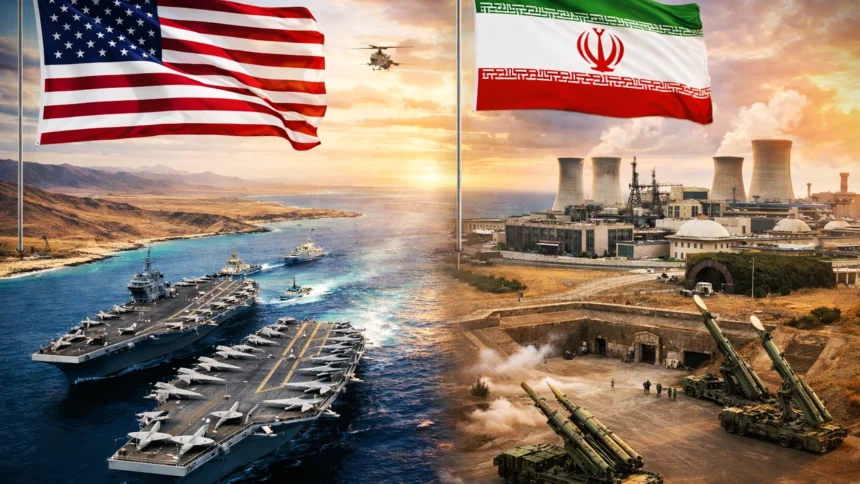
Following United States President Donald Trump’s dramatic announcement that he was convening his National Security Council in the Situation Room to finalize a sweeping ultimatum, the Islamic Republic of Iran has formally pushed back against Washington’s narrative.
Speaking through Iran’s state-run Tasnim News Agency, Ministry of Foreign Affairs Spokesperson Esmail Baghaei confirmed that high-level, indirect diplomatic talks between Washington and Tehran are actively continuing. However, Baghaei explicitly countered Trump’s rhetoric, clarifying that the two nations remain far apart and that no definitive baseline agreement or text has been finalized.
The Diplomatic Fault Lines: Tehran’s Direct Counter-Stance
The official statement from the Iranian Foreign Ministry serves as a direct point-by-point rebuttal to the aggressive, zero-concession framework leaked by President Trump on Truth Social earlier on Friday.
                  [THE U.S.–IRAN DIPLOMATIC STANDOFF]

  Trump Administration Mandate ─────────────────► Tehran Foreign Ministry Response

  • Physical seizure and destruction             • Absolute defense of atomic sovereignty;
    of Iran's enriched uranium stock.              uranium enrichment is a domestic right.

  • Immediate, unilateral de-mining               • Strait security is contingent upon the
    and opening of the Strait of Hormuz.           complete cessation of illegal U.S. blockades.
1. The Nuclear Sovereignty Red Line
While Trump stated that any finalized accord would mandate the physical seizure and destruction of Iran’s enriched uranium stockpiles by the U.S. military, Baghaei underscored that Iran’s peaceful nuclear program remains a core pillar of national sovereignty. Diplomatic sources in Tehran indicate that while Iran is open to caps on high-level purification percentages, the outright physical surrender or relocation of domestic nuclear infrastructure remains a non-starter.
2. The Strait of Hormuz Standoff
Addressing Trump’s demands for the immediate, unilateral de-mining of the Strait of Hormuz and the elimination of transit maritime tariffs, Tehran reiterated its position that Persian Gulf security is the exclusive responsibility of regional states. Baghaei implied that any permanent changes to Iran’s naval posture or mine networks are strictly conditional upon the total, verifiable dismantling of the United States Navy’s active counter-blockade in international waters.
3. The Rejection of “Maximum Pressure” Economics
Tehran sharply criticized Trump’s assertion that “no cash will change hands” during the initial phases of the pact. Iranian negotiators maintain that a comprehensive freeze on economic relief is entirely unviable. For any treaty to be signed, Iran expects an immediate roadmap for the unfreezing of billions of dollars in frozen oil revenues and the rolling back of banking restrictions that stifle the domestic economy.
Analysis: A War of Attrition and Rhetoric
The dueling press releases between the White House Situation Room and the Iranian Foreign Ministry highlight a high-stakes game of geopolitical brinkmanship playing out in real-time across the Middle East.
| Diplomatic Vector | The United States Strategy | The Iranian Strategy |
| Primary Tactic | Public Ultimatums: Utilizing platforms like Truth Social to project absolute military and economic leverage, forcing domestic and global audiences to view the deal as a total Iranian capitulation. | Bureaucratic Resistance: Utilizing state-sanctioned media to project calm, procedural resolve, signaling to domestic hardliners that the regime will not be bullied into asymmetric concessions. |
| Operational Goal | Immediate, irreversible rollback of Iran’s breakout timeline and immediate shipping lane access. | Managed escalation that forces Washington to offer genuine, immediate sanctions relief in exchange for compliance. |
Despite the daily rhetorical crossfire and the lack of a visible public breakthrough, the acknowledgement by both adversaries that negotiations are actively ongoing indicates that backchannel diplomacy remains functional. However, as long as Washington demands physical material seizure and Tehran demands immediate financial liquidity, the threat of an unintended military flashpoint in the Black Sea or the Persian Gulf remains at an all-time high.