The United Nations has issued a sharp rebuke against a newly unveiled strategic plan by Israeli Prime Minister Benjamin Netanyahu to significantly expand permanent military and administrative oversight across the Gaza Strip.
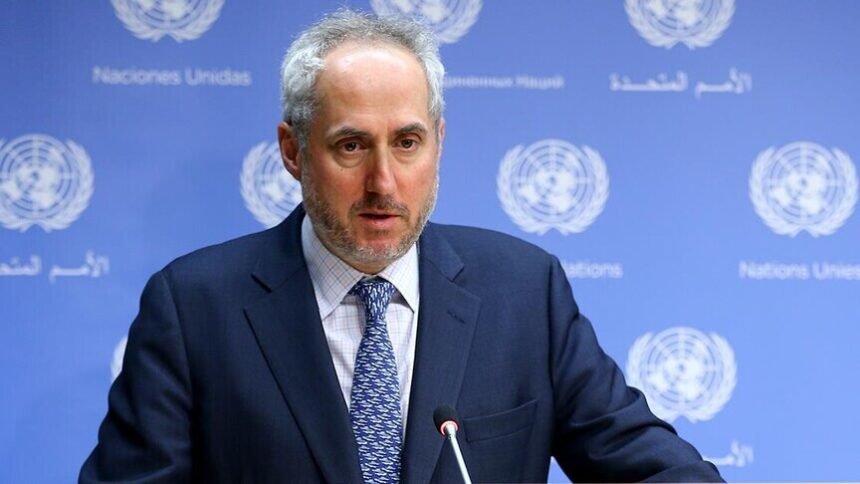
Speaking from UN Headquarters on Friday evening, May 29, 2026, UN Spokesperson Stéphane Dujarric directly countered the Israeli administration’s territorial declarations, reiterating the global body’s unyielding position on post-conflict governance.
1. Netanyahu’s Post-Conflict Blueprint: The 70% Annexation Goal
The diplomatic pushback was triggered by an official address from Prime Minister Netanyahu, who detailed a phased expansion of Israeli defense footprints across the devastated enclave.
According to Netanyahu, the Israel Defense Forces (IDF) currently exercise operational control over approximately 60% of Gaza. The Prime Minister formally announced the state’s intention to push that threshold further, establishing permanent control over at least 70% of the entire territory.
               [GAZA STRIP: MILITARY OCCUPATION TRACKING]

  Oct 2025 (U.S.-Backed Plan Baseline) ──► May 2026 (Current Standing) ──► Netanyahu Target

            53% Control                         60% Control               70% Total Control
While Netanyahu declined to provide granular technical details on the mechanism of this expansion, military analysts indicate the strategy relies on widening buffer zones, expanding fortified transit corridors (such as the Netzarim and Philadelphi axes), and establishing permanent Israeli security outposts within civilian sectors.
2. The UN Counter-Directive: An Absolute Defense of Sovereignty
The UN’s response was immediate and legally absolute. Stéphane Dujarric underscored that the international community would not recognize unilateral border modifications or permanent military re-classifications of occupied land.
UN Spokesperson Stéphane Dujarric:
“One hundred percent of Gaza must belong to the Palestinian people. The position of this organization remains entirely unchanged. We call for a complete withdrawal of Israeli forces from their forward military positions.”
3. Frictional Evolution from the 2025 U.S.-Backed Baseline
The current expansionist trajectory marks a definitive departure from the multinational diplomatic frameworks drafted late last year.
According to IDF records, Israeli territorial control stood at 53% in October 2025. That initial footprint was meant to be the baseline for localized military repositionings under a United States-brokered stabilization initiative aimed at implementing the first phases of a sustainable ceasefire and conflict-resolution pipeline.
| Timeframe | IDF Territorial Footprint | Geopolitical Context & Strategic Mandate |
| October 2025 | 53% Control | Aligned with the initial phase of a U.S.-backed transition plan towards regional stabilization. |
| May 2026 (Current) | 60% Control | Expanded through structural clearance operations and localized infrastructure fortification. |
| Proposed Target | 70% Control | Netanyahu’s new expansionist directive; explicitly rejected by UN leadership as a violation of international law. |
By shifting the target to 70%, Netanyahu’s government has effectively discarded the parameters of the 2025 transitional blueprint. International observers warn that the expansion of a permanent Israeli military administration inside Gaza will permanently disable any realistic path toward a two-state solution and deepen the systemic friction between Tel Aviv and global humanitarian bodies.