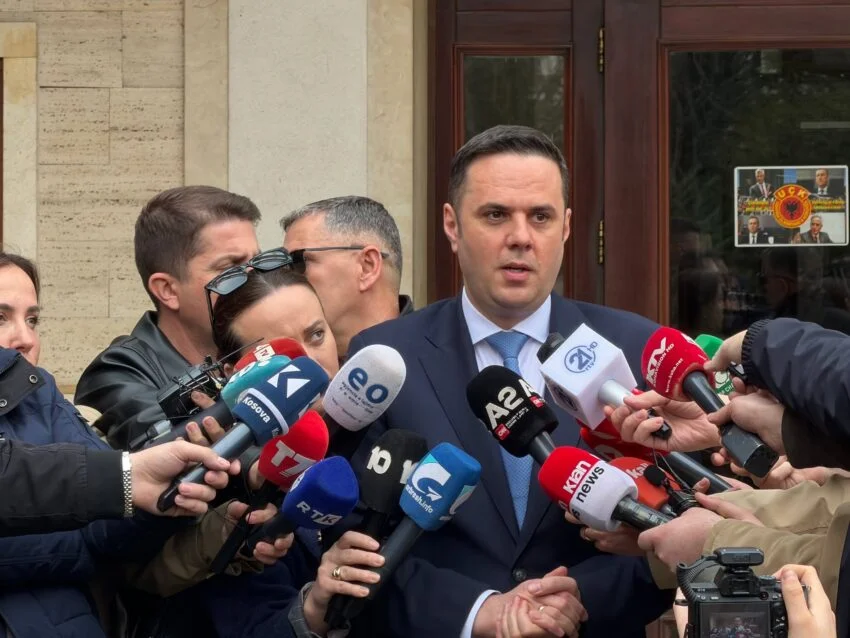
Following a meeting with Prime Minister Albin Kurti, LDK leader Lumir Abdixhiku stated that the party has not been presented with any candidate for the presidency to seek their support, signaling continuing political deadlock in Kosovo.
Abdixhiku emphasized that while elections could occur if parties choose to compete, LDK is not in favor of a contested race, preferring instead a consensus candidate:
“When there’s competition without consensus, it’s very difficult to reach 80 votes. A contest only makes sense when 61 votes are available. But when 81 votes are required, consensus and unity are essential — and that hasn’t been achieved.”
He criticized the lack of consultation and concrete proposals from other parties, noting that no candidate has been formally presented to LDK for consideration. At this stage, with 15 deputies, LDK cannot nominate a candidate on its own, as the law requires 20 signatures for nomination.
Abdixhiku described the situation as highly challenging:
“This was the second in a series of consultative meetings I’ve held with all political parties in Kosovo, including PDK’s Bedri Hamza and AAK’s Ramush Haradinaj. I see political consensus within Albanian parties as extremely difficult at this moment. No specific candidate has been presented, and no request for our vote has been made. We’ll need to wait until March 5, the day of the UÇK Epiphany, to see the future of the country’s highest institution.”
He stressed that uniting behind a candidate who represents popular consensus is crucial, warning that without agreement, any contested election is likely predetermined to fail:
“LDK prefers consensus over a contest because the outcome is predictable. Elections without consensus make reaching 80 votes nearly impossible. A contest only makes sense when fewer votes are needed. At this stage, consensus has not been achieved.”
The statement underscores the persistent political fragmentation in Kosovo and the difficulty of reaching broad agreement on the presidency, raising concerns about potential delays in forming a fully legitimate and balanced state leadership.