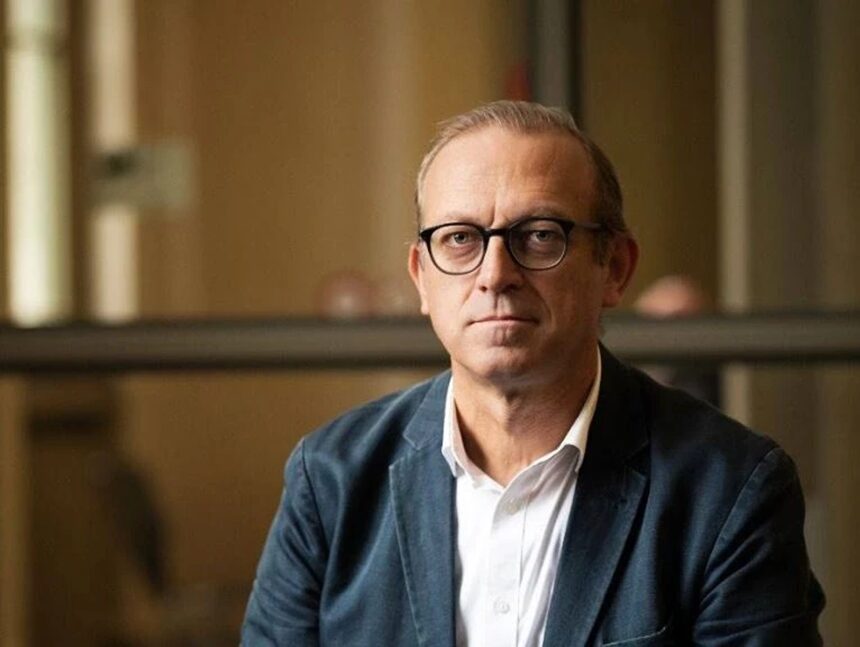
Journalist and publicist Enver Robelli has criticized what he calls a double standard by the European Union in dealing with issues related to community rights in the Western Balkans. According to him, European diplomacy has been very active in protecting the rights of the Serbian community in Kosovo but has not reacted to what he says are efforts to exclude the Albanian language from institutional use in North Macedonia.
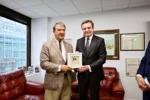
In a Facebook post on Saturday, Robelli acknowledged the engagement of European representatives regarding the rights of Serbs in Kosovo, saying it is “very good that the EU’s envoy, Peter Sorensen, is engaged in making the lives of Serbian citizens in Kosovo as easy as possible.” He was referring to the diplomat’s visit to Prime Minister Albin Kurti, during which agreements were reached to introduce certain facilitation measures for the Serbian community under the Law on Foreigners.
Robelli also mentioned reactions from ambassadors of major European countries, noting that it is positive that European diplomacy is paying attention to the rights of the Serbian minority in Kosovo and that the EU’s top diplomat, Kaja Kallas, has also been attentive to the issue.
However, he emphasized that there is “a big difference with the EU’s silence” when it comes to the use of the Albanian language in institutions in North Macedonia. According to him, around 30 percent of the population in that country are Albanians, and recently there have been discussions about traffic fines issued by the police being written only in Macedonian and English, “not in Albanian.”
Recently, the Constitutional Court of North Macedonia rejected the use of Albanian in messages related to traffic fines.
Robelli argues that while there is strong mobilization of European diplomacy for the roughly 3 percent Serbian community in Kosovo, there is little reaction regarding Albanians in North Macedonia.
“For 3 percent of Serbs in Kosovo we see a large mobilization of all European diplomacy… But for 30 percent of Albanians in North Macedonia, does anyone speak from Brussels, Berlin, Paris or Skopje?” he asked.
Robelli also pointed to the lack of reactions from various European officials and institutions, including the EU’s chief diplomat, ambassadors of key countries in Skopje, EU institutions, as well as the governments of Kosovo and Albania.
“The EU can be credible only if it engages without distinction for the rights of all non-majority communities in the Balkans. If it makes exceptions, then its credibility approaches zero,” Robelli concluded.