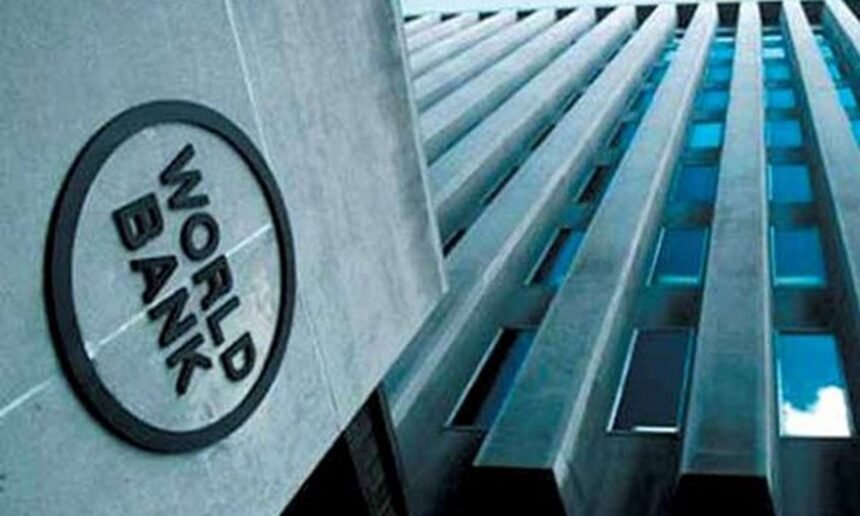
The World Bank projects that Kosovo’s economic growth this year will reach 3.7%, which is 0.1 percentage points lower than previous forecasts. For 2027, growth is expected to reach 3.9%.
Meanwhile, according to the World Bank’s assessment, Kosovo’s economic growth in 2025 was estimated at 3.6%.
The report states that economic growth in the Western Balkans during 2026–2027 is expected to slow, due to spillover effects from the conflict in the Middle East, persistent inflation, and increasing uncertainty.
Following the outbreak of the war between the United States and Israel and Iran at the end of February, global oil prices increased. This rise affected European energy markets and also impacted Kosovo, which imports oil.
“Global uncertainty and geopolitical tensions are slowing economic growth in the Western Balkans, and rising prices are directly affecting household budgets,” said Xiaoqing Yu, World Bank Director for the Western Balkans.
“While policymakers are using short-term fiscal measures to mitigate the impact of these pressures on households and businesses, our report shows that the key to long-term economic progress is jobs. The Western Balkans has a large pool of untapped talent—women, youth, and individuals who want to work but face barriers. Their inclusion in the labor market is one of the most effective measures the region can take to strengthen its economy,” Yu added.
For the region, combined economic growth—covering Kosovo, Albania, Bosnia and Herzegovina, Montenegro, North Macedonia, and Serbia—is projected to reach 2.8% in 2026, or 0.3 percentage points lower than previous estimates. For 2027, a modest increase of 3.2% is expected, according to the World Bank.
“To maintain reform momentum in a region facing growing labor shortages, expanding labor force participation is essential,” the report stated.
The institution emphasized that the region has significant untapped human capital—women, youth, and others—who want to work but face barriers to entering the labor market.
“If labor force participation rates across the region matched those of comparable EU countries, this would result in more than 2.8 million additional workers. Simply through greater inclusion of women in the labor market, annual economic growth could increase by 0.35 percentage points,” the World Bank noted.
According to Kosovo Agency of Statistics data, in 2025 the number of employed people exceeded 400,000. At the same time, unemployment is highest among women, who also bear a larger share of family and childcare responsibilities.
The World Bank also noted that working-age individuals, including graduates and low-skilled workers, are increasingly seeking better wages and opportunities abroad.
“The paradox is that although labor shortages are most acute in key sectors, many people remain unemployed or have completely given up searching for work,” the report said.
The international financial institution also warned that the population of the Western Balkans is “aging faster” than anywhere else in Europe, stating that within the next decade, one in five people will be over the age of 65.