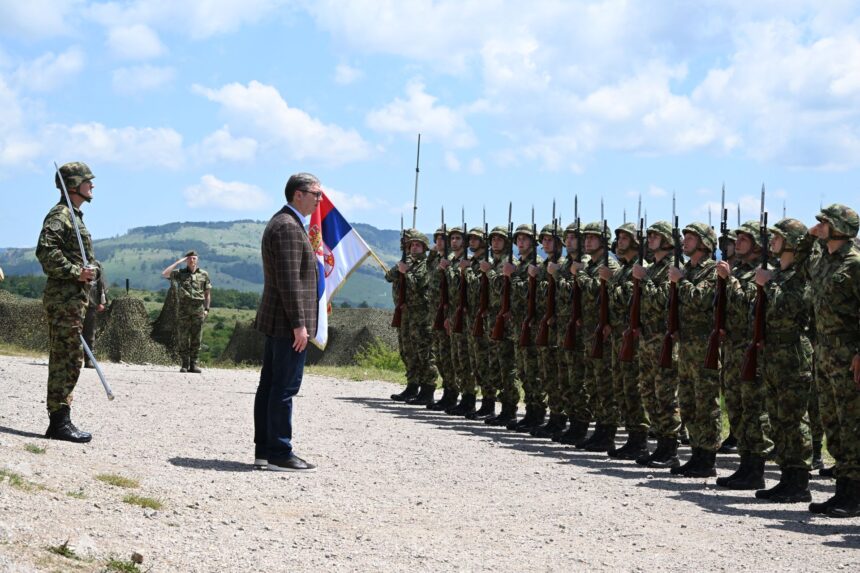
A strategic analysis released on April 29, 2026, suggests that Serbia is systematically maintaining the option of armed force in Kosovo as a live policy instrument. The report, authored by security analyst Drizan Shala for the Kosovo Dispatch, argues that Belgrade has moved beyond mere rhetoric, aligning its military procurement, intelligence tasking, and political vocabulary toward a specific geopolitical window of opportunity.
At the heart of this strategy is the activation of “Zavet”—a Serbian term for a “sacred covenant”—which frames the Kosovo issue not as a matter for negotiation, but as a transgenerational duty immune to diplomatic compromise.
The “Zavet” Framework: Rhetoric as Preparation
The deployment of covenantal language by the Serbian ruling party (SNS) is viewed by analysts as “anticipatory vocabulary.” By elevating policy to the level of sacred duty, the state provides its public with the cultural permission necessary for future kinetic action.
- Historical Echoes: Analysts draw direct parallels to the 1989 Gazimestan speech, where similar vocabulary preceded the outbreak of the Yugoslav wars within 24 months.
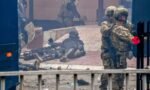
- Heroization of Conflict: The recent designation of those involved in the 2023 Banjska operation as “najhrabriji” (the bravest) serves to test and solidify domestic support for state-backed armed operations.
The Military Imbalance: An Arithmetic of Escalation
Despite Belgrade’s narrative of being “encircled” by the trilateral defense cooperation of Albania, Croatia, and Kosovo, the defense spending figures for 2025 tell a different story of regional dominance.
| Country/Bloc | 2025 Defense Budget |
| Serbia | €2.2 Billion |
| Croatia | €1.0 Billion |
| Albania | €526 Million |
| Kosovo | €208 Million |
| Combined Trilateral | €1.73 Billion |
The Strategic Gap: Serbia currently outspends its three neighbors combined by nearly €500 million. Furthermore, Kosovo’s entire four-year defense commitment under the current mandate is less than Serbia’s military allocation for a single year.
Procuring Operational Autonomy
Serbia’s procurement profile has shifted toward high-end, strategic systems that exceed territorial defense requirements. The acquisition of Chinese HQ-22 air defense, CM-400AKG hypersonic missiles (400km range), and Israeli PULS rocket systems suggests a focus on long-range precision strikes and strategic depth.
Crucially, the diversification of suppliers—integrating French Rafale jets and Israeli systems alongside Chinese and Russian platforms—points to a strategy of operational autonomy. This architecture is designed to allow the Serbian Armed Forces to operate independently, shielded from the potential logistical disruptions of Western embargoes or Russian sanctions.
The “Behavioral Prediction” Tasking
A critical turning point occurred on January 4, 2026, when President Vučić convened the National Security Council following the U.S. intervention in Venezuela. He reportedly tasked the civilian (BIA) and military (VOA) intelligence services with “behavioral prediction” of American conduct.
This directive is viewed not as a defensive assessment, but as a calibration exercise to map the exact limits of U.S. and NATO commitment. The objective is to identify the “gray zones” where Serbian action might become permissible without triggering a full-scale Western intervention.
The 2029 Window: A Looming Timeline
The strategy appears to be calibrated against a timeline recently vocalized by Western officials. In March 2026, the head of the German Bundeswehr, General Carsten Breuer, warned that the Russian Federation could be capable of a major conflict with NATO by 2029.
For Belgrade, this 2029 marker represents a potential “window” where:
- European strategic attention is fully absorbed by the Russian theater.
- U.S. engagement is redirected to higher-priority global theaters.
- KFOR’s deterrent weight drops below an acceptable threshold of risk.
Conclusion
The analysis concludes that Serbia’s military buildup, intelligence tasking, and religious/political endorsements are not separate operations, but six registers of a single strategic plan. While the use of force is not guaranteed, the structural evidence suggests that the state is working diligently to ensure that when a geopolitical window opens, the military instrument is ready, the public is prepared, and the risks have been calculated.