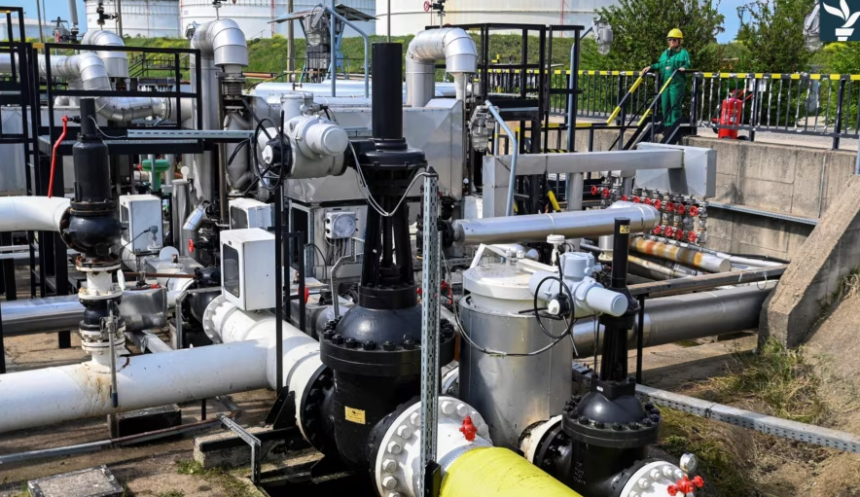
As of April 2026, the energy landscape in the Balkans remains a high-stakes geopolitical tug-of-war. While the European Union is doubling down on its commitment to phase out Russian energy, Serbia is moving in the opposite direction by advancing plans to connect to the Druzhba pipeline.
Here is a breakdown of the current situation and why it is causing friction in Brussels.
The Current Conflict: JANAF vs. Druzhba
Currently, Serbia’s oil supply is vulnerable because it relies on a single route: the Adriatic Pipeline (JANAF).
- The Route: Oil arrives by tanker at the Croatian port of Omišalj and is piped to refineries in Novi Sad, Serbia.
- The Problem: Because of EU sanctions, Serbia has been prohibited from importing Russian crude through this maritime route since December 2022.
- The Strategy: To bypass these restrictions, Belgrade is planning a 100-kilometer interconnection to Hungary. This would allow Serbia to tap into the southern branch of the Druzhba pipeline, which carries Russian oil overland—a method that currently enjoys certain EU exemptions.
Key Challenges to the Project
1. The “Expired” Exemption
The EU’s ultimate goal is to stop importing “every molecule” of Russian energy. While Hungary and Slovakia were granted exemptions because they are landlocked, the EU plans to terminate these remaining imports by September 2027.
- The Risk: Serbia aims to have its new pipeline operational by late 2027. Experts warn this could lead to a “stranded asset”—a multi-million dollar pipeline that becomes illegal or useless shortly after completion.
2. Shifting Politics in Hungary
The project was fast-tracked under the close alliance between Serbian President Aleksandar Vučić and Hungarian PM Viktor Orbán. However, following the April 2026 elections, the rise of Peter Magyar in Hungary introduces uncertainty. While Magyar acknowledges that energy independence takes time, he has signaled a more distanced relationship with Moscow, potentially complicating Belgrade’s “backdoor” oil strategy.
3. EU Unity
Radio Free Europe reports that the European Commission has remained quiet regarding Serbia’s potential Druzhba connection. However, analysts suggest that allowing a non-member state (Serbia) to use exemptions meant for member states (Hungary/Slovakia) would legally and politically undermine the entire sanctions regime.
Statistical Context: Russia’s Fading Influence
Despite Serbia’s efforts, Russia’s grip on European energy is at an all-time low.
| Year | EU Share of Russian Oil Exports |
| 2021 | 45% |
| 2025 | 6% |
| 2027 (Target) | 0% |
For Serbia, the Druzhba connection is as much about geopolitics as it is about energy. By pursuing Russian oil, Belgrade is testing the EU’s resolve and maintaining its “neutrality” between East and West. However, with the EU’s 2027 deadline looming and regional alternatives like the Croatian JANAF system expanding, the window for Russian oil in the Balkans is rapidly closing.