During a historic state visit on April 28-29, 2026, Swiss President Guy Parmelin met with Serbian President Aleksandar Vučić to sign a new four-year cooperation program and an innovation funding agreement. However, the visit has also sparked a debate about the relevance of “neutral” states in a world increasingly polarized by the wars in Ukraine and Iran.
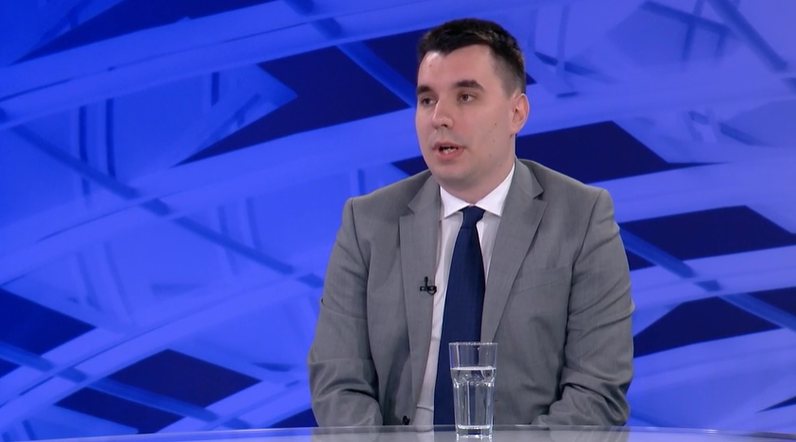
Political analyst Miljan Mladenović, speaking to N1, provided a sharp critique of Serbia’s current diplomatic standing, contrasting it with Switzerland’s traditional model of neutrality.
The Limits of Swiss Mediation
While President Parmelin offered Switzerland as an informal mediator for the Belgrade-Pristina dialogue, Mladenović argued that the geopolitical landscape of 2026—shaped by Brexit, Donald Trump’s two mandates, and active conflicts in Eastern Europe and the Middle East—has significantly diminished the influence of neutral actors.
“In today’s world, neutral states no longer have the same weight,” Mladenović said. “Switzerland’s insistence on human rights during this visit is a signal that future Swiss aid will focus on broad societal actors, not just the government.”
“Four Pillars” Policy Collapses
Mladenović emphasized that Serbia’s long-standing foreign policy of “sitting on four chairs” (balancing the EU, US, Russia, and China) is no longer sustainable as the “four pillars” drift further apart.
- Transactional vs. Value-Based: He noted a key difference: Switzerland bases its neutrality on democratic values, whereas Serbia’s neutrality is transactional—a “business model” based on what is convenient in the moment.
- The “Lesser Evil” Strategy: Belgrade’s current policy is viewed as a perpetual delay of decision-making. “For example, not imposing sanctions on Russia, but allowing arms exports to Ukraine—this is a clear boundary: avoid angering Moscow while satisfying the West,” Mladenović explained.
Stalled Reforms and Domestic Pressure
The analyst warned that the Serbian government is losing its ability to “calculate” its relationship with the EU.
- Institutional Fatigue: Increasing scrutiny from the Venice Commission and the EU suggests that the era of symbolic reforms is over.
- Domestic Shifts: Mladenović pointed to local election trends showing a 9% increase in voter turnout, suggesting that a high-turnout national election (potentially reaching 57.5%) could significantly favor the opposition, especially in urban centers.
The Innovation and Cooperation Program (2026–2029)
Despite the political tensions, the visit yielded concrete bilateral successes:
- Innovation Fund: A new agreement will provide Serbian tech startups with easier access to Swiss incubators and researcher visas.
- CHF 120 Million Investment: The new cooperation program focuses on digital innovation, climate-resilient urban development, and vocational training.
- Economic Ties: Swiss companies currently employ over 13,000 people in Serbia, primarily in med-tech and machinery.
As President Parmelin departs for North Macedonia today, the dialogue on human rights and the “business model” of Serbian diplomacy remains a focal point for critics and policymakers alike.