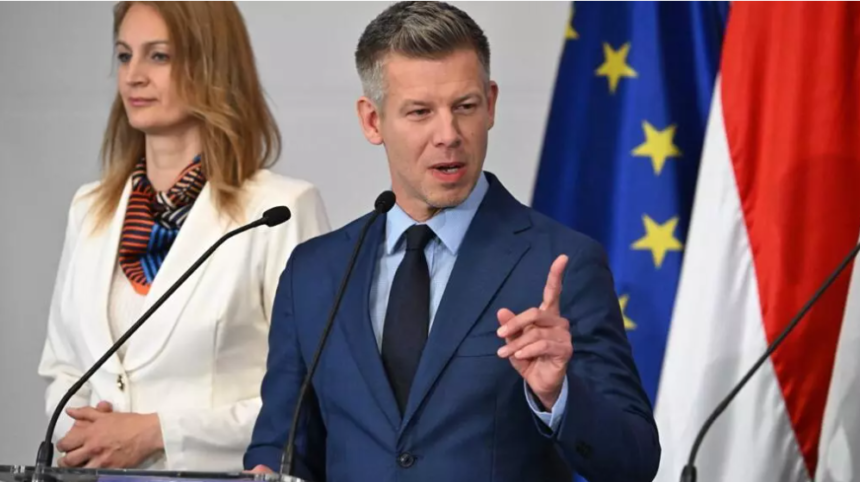
In a high-stakes meeting that signals a historic shift in Central European politics, Hungary’s Prime Minister-elect Peter Magyar arrived in Brussels today for talks with European Commission President Ursula von der Leyen. The meeting aims to turn the page on a decade of friction and secure the release of €17 billion in EU funding that has been frozen due to rule-of-law concerns under the previous administration.
The talks come just weeks after Magyar’s Tisza party secured a landslide constitutional majority in the April 12 elections, ending Viktor Orbán’s 16-year tenure. This “super-majority” is a crucial factor in the negotiations, as it grants the incoming government the power to swiftly enact the legal and constitutional reforms demanded by the EU.
The Race Against the Clock
The primary driver of the current urgency is a looming financial “cliff.” A significant portion of the frozen assets—approximately €11 billion from the EU’s post-pandemic Recovery and Resilience Facility (RRF)—is subject to a strict “use it or lose it” deadline of August 31, 2026.
- The Milestones: To access the cash, Hungary must prove it has met the “27 super milestones,” which include strengthening judicial independence, enhancing anti-corruption safeguards, and ensuring transparency in public procurement.
- The Commitment: Unlike his predecessor, Magyar has made unblocking these funds a “fundamental priority,” aiming to reach a political agreement as early as mid-May to stabilize the Hungarian economy.
Restoring Shared Values
Beyond the immediate financial injection, the Brussels meetings are focused on a broader “reset” of relations. Discussions are expected to cover:
- Erasmus+ and Horizon Europe: Reintegrating Hungarian students and researchers into these flagship EU programs.
- Media and Academic Freedom: Reversing laws that restricted independent voices and university autonomy.
- Ukraine and Regional Unity: Unblocking EU reimbursements for military aid to Ukraine, a move that would align Budapest with the rest of the bloc’s stance against Russian aggression.
A Pivot for the Region
The diplomatic thaw in Brussels is likely to have a ripple effect across the Balkans. As Hungary aligns closer to EU norms, the “backdoor” options for Russian interests in the region—such as the proposed expansion of the Druzhba pipeline—face increasing political headwinds.
With the Commission emphasizing that the funds are intended to benefit Hungarian citizens directly, the new leadership in Budapest appears ready to trade the “sovereignty” rhetoric of the past for a seat at the heart of a unified Europe.