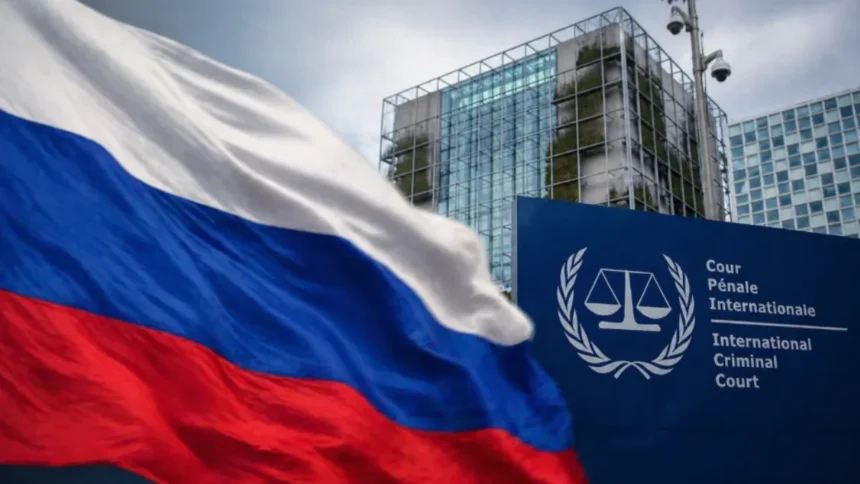
In a move seen by analysts as a blatant attempt to exert continued influence over Balkan internal affairs, Russian Ambassador Aleksandar Bocan-Harčenko met with Serbian Justice Minister Nenad Vujić today to pressure for the release of convicted war criminal Ratko Mladić.
The meeting, held on April 28, 2026, underscores the Kremlin’s long-standing strategy of using sensitive nationalist symbols to stall Serbia’s European integration and maintain its role as a regional power broker.
Weaponizing a War Criminal
Despite Mladić’s conviction for genocide, crimes against humanity, and war crimes—including the 1995 Srebrenica massacre—Moscow has consistently attempted to cast the “Butcher of Bosnia” as a victim of “biased international justice.”
By championing Mladić’s release on “humanitarian grounds,” Russia is effectively:
- Undermining International Law: Discrediting the International Residual Mechanism for Criminal Tribunals (the successor to the ICTY).
- Fueling Revisionism: Validating extreme nationalist narratives within Serbia that paint war criminals as heroes.
- Testing Belgrade’s Loyalty: Forcing the Serbian government to choose between international legal obligations and Moscow’s “fraternal” support.
The Strategy of “Sovereignty”
During the meeting, Bocan-Harčenko reiterated Russia’s “unyielding support” for Serbian sovereignty. However, critics argue this support is a double-edged sword.
“Russia’s interest isn’t Mladić’s health; it’s about keeping Serbia tethered to the past,” says one regional political analyst. “By keeping the Mladić issue alive, Moscow ensures that Serbia remains at odds with the Hague and, by extension, the European Union.”
The Russian Embassy’s statement regarding “abuses in international justice” is a thinly veiled attack on the Western-backed legal order, positioning Russia as the sole protector of Serbian interests against an “unjust” West.
A Pattern of Interference
This latest intervention follows a 2024-2025 trend where Russia has increasingly used Serbian passports, energy deals, and historical grievances to maintain a foothold in the Balkans. The push for Mladić’s transfer to Serbia—where he would likely be treated as a celebrity rather than a prisoner—is seen as the latest tool in the Kremlin’s “hybrid influence” toolkit.
As the Court in The Hague considers a medical assessment, the international community remains wary. Releasing Mladić to Belgrade would not only be a slap in the face to his victims but a significant geopolitical victory for a Russia looking to prove it can still dictate terms in the heart of Europe.