Western nations currently lack effective defenses against low-cost, mass-produced aerial threats. To respond effectively, it is essential to begin large-scale production of a variety of interceptor systems, especially for high-intensity conflicts.
The development of mass-use strike systems has accelerated sharply in the past two to three years, particularly since Russia’s aggression against Ukraine. Ukrainian military intelligence estimated as early as 2022 that Moscow could produce 6,000 Shahed-class drones per year by 2025. In practice, over 54,000 heavy drones, including Shahed and Gerbera-class UAVs, struck Ukraine in 2025 alone. Waves of 100–400 drones in single attacks have become routine, with more than 2,000 tactical UAVs destroyed daily by Ukrainian forces.
Western air defense systems—from U.S. Patriot and European SAMP/T to short-range systems like CAMM, IRIS-T, and NASAMS—were designed primarily to counter manned aircraft, cruise missiles, and ballistic threats. Their missiles are expensive, difficult to produce, and require years to manufacture in sufficient quantities. As a result, current production levels are insufficient to counter mass swarms of drones or low-cost offensive systems.
The threat is evident even in the Persian Gulf, where U.S. Central Command and regional partners have some counter-UAS experience, yet critical infrastructure remains vulnerable to drone attacks. NATO short- and very-short-range air defense capabilities in Europe are even lower than those in Gulf states of similar size, and modernization programs often take years to complete.
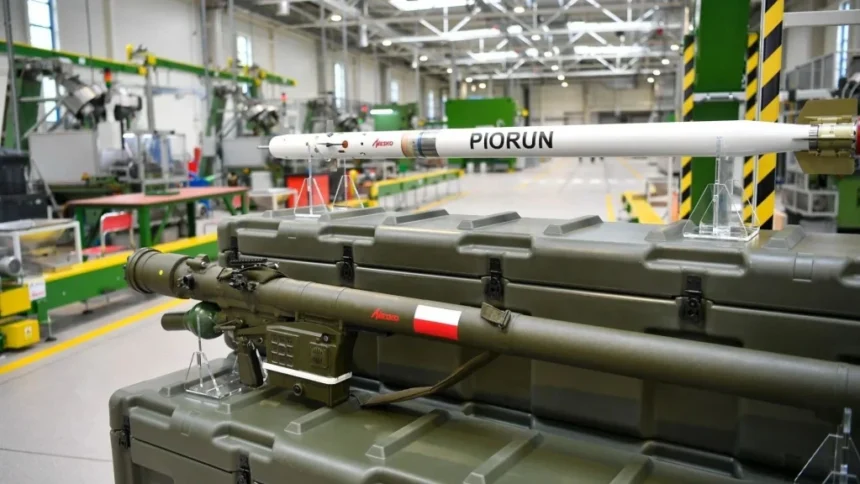
Urgent measures are needed: cost-effective, mass-producible systems capable of countering such threats. One example is Estonian firm Frankenburg Technologies, which is developing an intercept system currently in limited production. Similarly, existing systems like Poland’s Piorun MANPADS have proven effective in Ukraine. Poland is NATO’s largest producer, with an annual capacity of 1,300–1,400 missiles, supplying allies such as Sweden, Norway, Estonia, Latvia, Moldova, and Belgium.
Piorun is cost-effective and can neutralize a wide range of aerial threats, from drones to cruise missiles. Recent Polish contracts cover 3,500 missiles and 600 launch units, but demand continues to exceed production due to military expansion and new territorial defense components. Using affordable, mass-producible systems like Piorun to handle swarms or smaller targets frees more expensive, heavy air defense assets (e.g., Narew) for high-value threats.
Investments must also continue in low-cost counter-drone systems. Expensive, heavy air defenses remain critical for high-value threats but must be complemented with mass-producible solutions to ensure sustainable protection. Production should occur domestically wherever possible.
The ongoing conflict in Ukraine and emerging tensions in the Persian Gulf highlight the strategic importance of the defense economy. Early effectiveness in a conflict increasingly depends on the ability to rapidly field and sustain protective systems. Western defense industries, traditionally focused on high-performance but costly equipment, must adapt to the realities of mass technological warfare and leverage existing production capacity in Poland and allied countries to achieve adequate system saturation.