Unity, the fight for a better position of the Serbian community in Kosovo, and a different perception of political circumstances.
These are some of the reasons why the Serbian civic initiatives “Roots” and “North for All,” as well as the political party Serbian People’s Movement, signed a cooperation agreement on March 15.
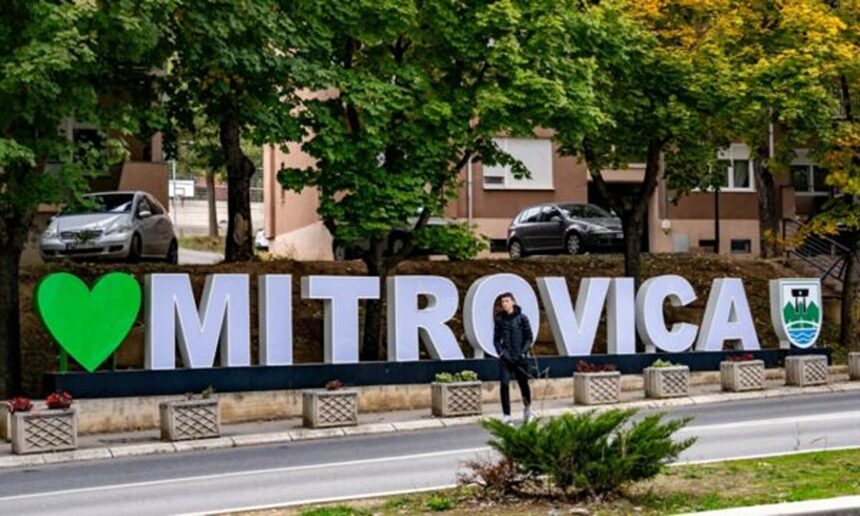
These political entities have councilors in the municipal assemblies of Leposavić, North Mitrovica, Zubin Potok, and Ranilug.
One of the signatories of this agreement, at the same time the leader of the civic initiative “Roots,” Ivan Vučković, told Radio Free Europe that the cooperation agreement also implies the possibility of joint action by these three political entities in the upcoming elections.
Currently, it remains unclear whether new parliamentary elections will be held in Kosovo, as the Constitutional Court of the country decided on a temporary measure until March 31, suspending the implementation of the decree of President Vjosa Osmani on dissolving the Assembly, until it reviews the constitutionality of this decision.
Is there room for new political actions?
Zoran Savić, from the non-governmental organization Aktiv in North Mitrovica, says that any cooperation between Serbian opposition parties in Kosovo is welcome, provided that it has a common goal and strategy.
But according to him, it remains to be seen whether the latest agreement will result in a more serious political alternative in practice.
“What is certain is that political pluralism is very necessary among the Serbian community in Kosovo. Only a broader political front can represent a more serious counterbalance to the existing options from the Serbian community – on one hand, the Serb List, which Belgrade sees as the only legitimate political address for Serbs in Kosovo, which is absolutely not true, and on the other hand, the party of Nenad Rašić, which Kosovo’s institutions see as their only partner from the Serbian community,” Savić told Radio Free Europe.
Political scientist from Belgrade, Ognjen Gogić, believes that part of the Serbian opposition has entered into a cooperation agreement because it expects new elections to be called. However, he is skeptical that in the end – if new elections are set – these parties will run with a single joint list.
He recalls that ahead of the elections in December last year, there was no joint appearance of Serbian opposition parties or civic initiatives, but adds that there is room for new political actions.
“Elections have already shown that there is space for part of the voters to vote for a ‘third path,’” Gogić said.
The Serb List, which has the support of Belgrade, won nine out of ten parliamentary seats reserved for the Serbian community in the December 28 elections, while one seat was won by the Party for Freedom, Justice and Survival of Nenad Rašić, who has good cooperation with the government of Prime Minister Albin Kurti and is currently Minister for Communities and Returns.
Who can join the new alliance?
Vučković, who is also a councilor in the Municipal Assembly of Leposavić, says they are open to cooperation with other organizations or political individuals, but excluding those who have cooperated with the Serb List or the government of Albin Kurti in the past.
“We believe that unity can lead to progress. We did not sign this agreement to compete with anyone, but we want to offer a different perception of political conditions. We are not interested in whether this will reflect on the Serb List or Rašić’s party. We will offer our program, our people – that is all that interests us,” Vučković said.
He adds that all signatories of the agreement maintain their individuality, but that joint action is still possible when it comes to important interests of the Serbian community.
Milija Biševac, representing the Serbian People’s Movement, said at a press conference on March 15 that the cooperation agreement with the civic initiatives “Roots” and “North for All” was signed to offer the Serbian community an alternative, namely to create “authentic politics.”
“For many years, a wrong policy has been pursued here, dictated by the Serb List, which has always had the official support of Belgrade and is leading us toward destruction. Precisely for this reason, we decided to start a process of uniting all those who think differently,” he said.
Is an independent policy of Kosovo Serbs sustainable?
Savić says that a policy that tries to be independent both from Belgrade and from Pristina “makes sense,” but that it is very difficult to achieve in practice.
He emphasizes that the Serb List has strong political and institutional support from Belgrade and that, for this reason, it is difficult to oppose it.
“In addition, for years a narrative has been built that citizens – in this case from the Serbian community – secure basic living conditions from the budget of the Republic of Serbia only thanks to the fact that the Serb List is in power. This is absolutely not true. On the other hand, Nenad Rašić also has considerable support from certain political actors in Pristina, so the space for political options that try to be independent from both sides is quite narrow,” Savić said.
However, he adds that the unification of opposition political actors is necessary and that changes at the local level are already noticeable – simply from the fact that political voices are being heard that are not from the Serb List.
“I believe that this is important for a society that, at least declaratively, strives for democratic principles, because the lack of debate, dialogue, and confrontation of different opinions on issues affecting the Serbian community is one of the main reasons why it is in a catastrophic situation today,” Savić said.
Gogić, on the other hand, says that the three political entities that signed the cooperation agreement coordinated their actions at the local level, but that “the alliance will have no meaning if they do not go to elections together.”
“This is the basic test. This is where they failed before, because when it was most needed, before the elections, a split occurred. Now, it remains to be seen whether this alliance will survive if there are elections in Kosovo,” Gogić concluded.