Montenegro has reaffirmed its reliance on NATO and good neighborly relations as the foundation of its security, following concerns over Serbia’s acquisition of Chinese-made missiles.
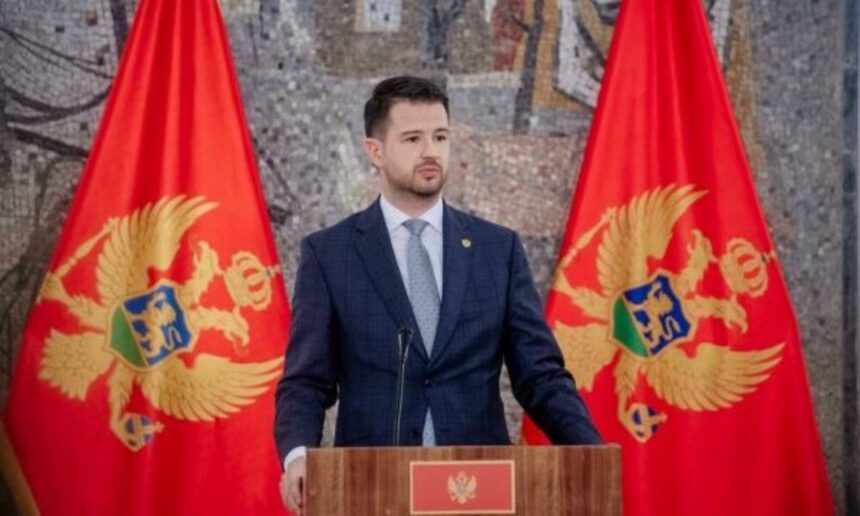
According to the office of President Jakov Milatović, the country’s membership in NATO since 2017 represents a strategic decision that has strengthened national stability and security. Officials emphasized that Montenegro remains committed to fostering constructive relations with all neighboring countries, highlighting trust and cooperation as essential pillars for lasting peace and development in the Western Balkans.
“Montenegro maintains good neighborly relations with all countries in the region, aware that mutual trust and cooperation are key preconditions for long-term peace and progress,” the president’s office stated.
The remarks come after Serbian President Aleksandar Vučić confirmed that Beograd had acquired Chinese CM-400AKG missiles, making Serbia the first European country to possess such systems. Vučić stated that the Serbian Armed Forces already have a “significant number” of these missiles and plan to expand their arsenal further, noting that MiG-29 fighter jets have been adapted to carry them.
The development has raised concerns across the region. Croatian Prime Minister Andrej Plenković reportedly contacted NATO Secretary General Mark Rutte regarding the issue, warning that such weapons had not previously been seen in Europe. Meanwhile, Croatian President Zoran Milanović questioned Serbia’s intentions, expressing concern over its procurement of offensive weaponry.
Serbia’s Chief of General Staff, Milan Mojsilović, responded by stating that the missiles were not intended for specific neighboring capitals such as Zagreb, Sarajevo, or Podgorica, but rather as a deterrent against any potential threats to Serbia.
Security analyst Nikola Lunić noted that the acquisition carries both political and symbolic weight, signaling power while also posing a potential security challenge in the region.
Despite rising tensions, Montenegro’s leadership stressed that the Western Balkans must remain focused on strengthening cooperation and advancing toward a shared European future, particularly in a time of growing global uncertainty.