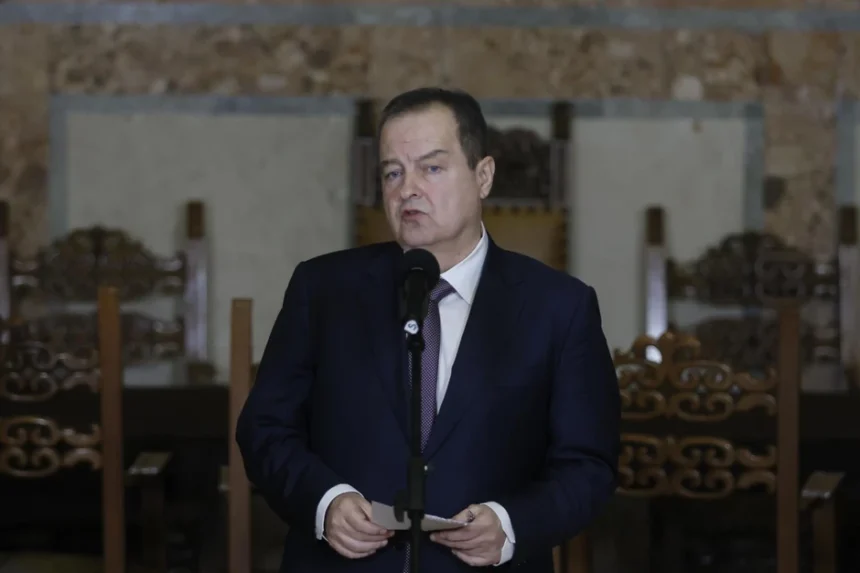
Serbia’s Interior Minister Ivica Dačić has sparked renewed controversy with his statements marking the anniversary of the 2004 unrest in Kosovo, describing the events as a “planned and organized pogrom” driven by what he called “Albanian separatism.”
In a public statement, Dačić claimed that the violence, which erupted over several days in March 2004, had a clear objective of ethnically cleansing Serbs from Kosovo. He asserted that homes, religious sites, and cultural heritage were systematically destroyed, forcing thousands of Serbs to flee.
However, such claims remain highly contested and reflect longstanding political narratives promoted by officials in Serbia. International reports and investigations into the 2004 events have documented widespread violence but have not conclusively supported assertions of a centrally organized campaign of ethnic cleansing as framed by Serbian authorities.
Dačić further criticized the international community, alleging a continued lack of justice for Serbian victims, while omitting broader accountability issues and the complex context of post-war Kosovo. Analysts note that such rhetoric often resurfaces during politically sensitive anniversaries, reinforcing nationalist sentiment rather than contributing to reconciliation.
The March 2004 unrest remains one of the most sensitive chapters in Kosovo’s recent history, but observers stress the importance of balanced narratives and fact-based dialogue to avoid deepening divisions in the region.