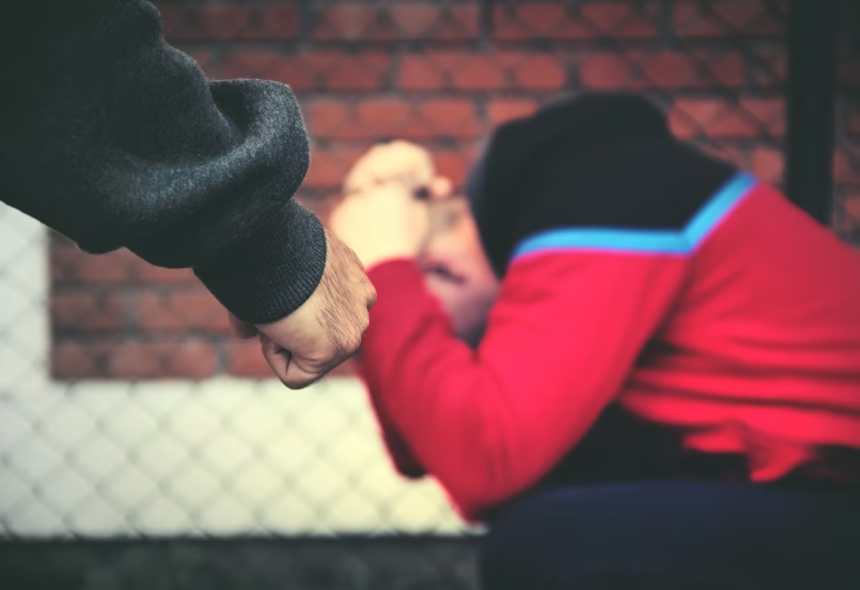
A damning new report by the Council of Europe’s Committee for the Prevention of Torture (CPT), published today, has exposed severe lapses in the protection of minors and psychiatric patients within Serbian state institutions. Based on findings from a late 2024 visit, the report paints a grim picture of “excessively punitive” environments where sexual violence among minors is frequent, and the use of physical force by staff remains a systemic issue.
The publication comes at a time of heightened scrutiny for the Serbian government, as international bodies increasingly link the country’s democratic backsliding to a broader collapse in human rights protections.
1. Kruševac Juvenile Facility: A Culture of Fear
While the CPT noted minor material improvements in the Kruševac Educational-Correctional Facility, the underlying institutional culture was described as fundamentally broken.
- Inter-Juvenile Violence: The Committee expressed grave concern over rampant violence among minors, including sexual violence. Shockingly, the report noted that alleged victims were often placed in “closed-regime” blocks—a move the CPT condemned as a form of “appalling” secondary punishment.
- Staff Brutality: Despite previous warnings, staff continue to use batons, sometimes causing serious injury. The CPT has reiterated its call for an absolute ban on batons in educational facilities, urging a shift from a punitive to an educational mission.
- Lack of Support: In cases of alleged abuse, the report found a critical lack of immediate forensic medical examinations and psychological support for victims.
2. Psychiatric and Prison Hospitals: “Degrading Treatment”
The report’s findings extend into the healthcare sector, revealing deep-seated issues in both adult and pediatric psychiatric care.
- The “Laza Lazarević” Clinic: Conditions in this prominent Belgrade clinic have reportedly worsened, with treatment remaining almost exclusively pharmacological. The CPT observed the frequent use of mechanical restraints (fixation), sometimes performed in the presence of other patients, which violates international dignity standards.
- Special Prison Hospital: Female patients, in particular, face “humiliating treatment” due to a systemic lack of basic hygiene supplies. The CPT also noted instances of staff physically striking patients and a general lack of individualized care plans.
- Pediatric Psychiatry: While no direct abuse was reported, the Committee raised alarms over children being locked in acute psychiatric wards for long periods without clear medical necessity or access to the outdoors.
3. The Government’s Response: More Promises, Little Action
In response to the report, the Serbian authorities have pledged to form a Ministry of Justice working group to draft a new Law on Juvenile Offenders by the end of 2025. However, human rights activists remain skeptical.
For the Vučić regime, this report is the latest in a series of international rebukes. Critics argue that the “punitive culture” described by the CPT mirrors the state’s broader approach to dissent—using force and institutional intimidation to maintain control. The CPT’s findings suggest that the decay of the rule of law in Serbia has moved from the political sphere into the most vulnerable sectors of society: the care of children and the mentally ill.
Key CPT Recommendations for Serbia (2026):
- Immediate Ban on Batons: Prohibit the use of batons as a legitimate means of force in juvenile facilities.
- Mandatory Reporting: Ensure all allegations of ill-treatment and sexual violence are immediately forwarded to the police and prosecution.
- Modernize Psychiatry: Shift away from “pharmacological-only” treatment toward psychosocial support and individualized care.
- End Child Detention in Prison Hospitals: Immediately cease the placement of children in prison hospitals that cannot meet their developmental needs.