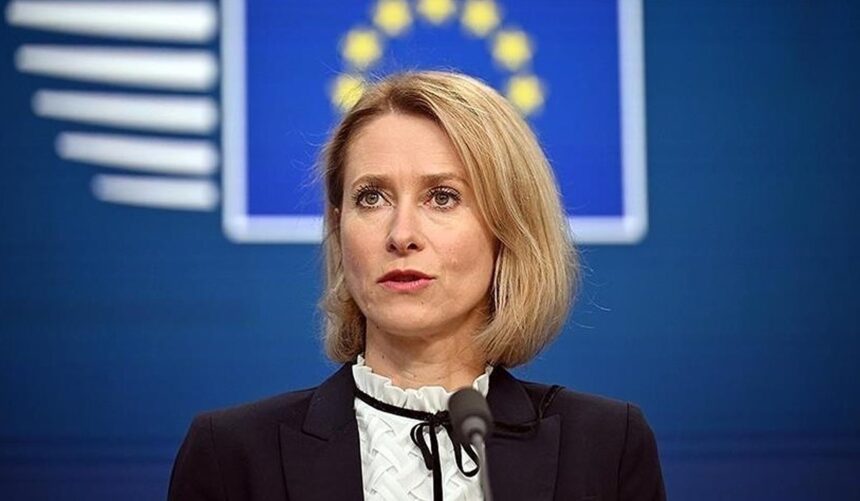
In a forceful statement on the sidelines of the Nordic-Baltic Eight (NB8) foreign ministers’ meeting today, April 30, 2026, the EU’s High Representative for Foreign Affairs and Security Policy, Kaja Kallas, warned that Europe must not act as a “demandeur” toward the Kremlin.
Kallas argued that seeking dialogue without leverage would be a strategic mistake, insisting that the European Union must instead force Russia into a position where it has no choice but to engage in a “genuine dialogue for peace.”
Key Highlights from Kallas’s Statement
- The “Demandeur” Risk: Kallas explicitly cautioned against diplomatic subservience. “We should not humiliate ourselves by being the demandeurs—’please we beg you to talk to us’—but we should put them in a position where they actually go from pretending to negotiate to actually negotiate,” she told reporters.
- Lack of Sincerity: The High Representative noted that there are currently no signs that Moscow is willing to enter meaningful or serious discussions, despite ongoing back-channel communications between other global powers.
- Skepticism of US-Russia Calls: Referring to recent reports of a phone call between U.S. President Donald Trump and Vladimir Putin, Kallas expressed skepticism, stating that such conversations often leave “too many questions unanswered” and lack the necessary pressure to secure a lasting peace.
Upcoming Strategy Meeting in Cyprus
Kallas announced that EU foreign ministers will soon convene for an informal meeting in Cyprus to define a unified European stance on Russia.
- Defining the Post-War Order: The goal of the Cyprus meeting is to establish a list of concrete demands for Russia once the war in Ukraine concludes.
- Long-Term Security: Kallas emphasized that Europe must decide what a “defeated Russia” or a “post-war Russia” should look like to ensure it no longer poses a threat to any neighboring countries or the continent as a whole.
The Wider Geopolitical Context (April 30, 2026)
The diplomat’s remarks come at a time of extreme global volatility, with European leaders balancing multiple security crises:
- The Iran War: Kallas noted that Russia is currently benefiting from the Strait of Hormuz blockade, which has driven up oil prices and distracted Western attention from Ukraine.
- ASEAN Outreach: Earlier this week, Kallas urged Southeast Asian nations to halt purchases of Russian crude oil to further squeeze Moscow’s war chest.
- Domestic Pressures: The “NB8” ministers (Denmark, Estonia, Finland, Iceland, Latvia, Lithuania, Norway, and Sweden) issued a joint communiqué calling for the total removal of Russian and Belarusian influence from European cultural and sporting events.
Kallas’s message is clear: Dialogue with Putin is only valuable if conducted from a position of strength and unity. Until that strength is established through further sanctions and military support for Ukraine, Europe will remain silent.