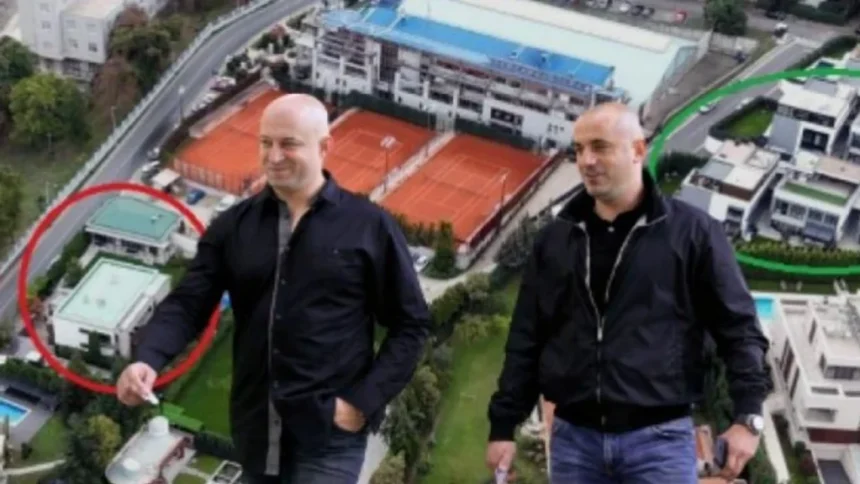
An investigative report by BIRN and local security analysts has revealed that Milan Radoičić and Zvonko Veselinović, two figures at the center of regional instability, are expanding their influence through massive, unauthorized underground construction in Belgrade’s elite Dedinje neighborhood.
While Radoičić remains free in Serbia following his involvement in the 2023 Banjska attack, he and his business partner Veselinović are reportedly utilizing a new urban planning system to build sprawling “bunkers” beneath their luxury villas.
The “Hidden” Expansion in Dedinje
The investigation details an extreme expansion of underground levels that, in some cases, are several times larger than the surface structures. These projects are linked to the families and close associates of the two men:
- The Veselinović Complex: Property belonging to Ljiljana Božović (Veselinović’s wife) has expanded to over 3,050 square meters. While only 812 square meters are above ground, over 2,200 square meters are located sub-surface.
- The Radoičić Property: Since admitting to the Banjska attack, Radoičić has reportedly transferred his assets to his ex-wife (following a reported divorce). Her villa includes over 500 square meters of underground space with no clear designated purpose.
- The Petrović Link: Nikola Petrović, a close associate and “godfather” (kumbar) to President Aleksandar Vučić, has added over 1,100 square meters of underground space to his property.
Total Underground Expansion: Investigative data suggests the combined underground network across these properties exceeds 4,500 square meters.
Urban Risks and Legal Loopholes
Experts warn that these “bunkers” are being facilitated by controversial changes to Belgrade’s General Regulation Plan passed in late 2023. These changes exclude underground spaces from building limit calculations, allowing for virtually unlimited subterranean growth.
- Environmental Dangers: Architects and urban planners warn that these massive excavations destabilize the terrain, increase the risk of flooding, and bypass standard safety inspections.
- A “Dual Reality”: Critics argue the city’s planning documents have been transformed into “tailor-made” permits for the political elite, rendering public oversight obsolete.
The Legal Vacuum: Banjska vs. Belgrade
While a court in Prishtina issued the first sentences related to the Banjska attack on April 24, 2026, the legal process in Belgrade remains stagnant.
- No Indictment: Nearly three years after the attack, the Higher Prosecutor’s Office in Belgrade has yet to file an indictment against Radoičić.
- Travel Ban: The High Court confirmed today, April 30, that Radoičić’s passport remains confiscated and he is required to report to the police twice a month. His ban on leaving his residence was extended for another three months on March 31.
- International Pressure: Despite repeated calls from the EU, US, and NATO for accountability, Radoičić remains a free man within Belgrade, shielded by what opposition figures call a “system of impunity.”
Summary of Sanctions & Status (April 2026)
| Individual | Legal Status (Serbia) | US Sanctions Status | Role |
| Milan Radoičić | Reporting to police; no indictment. | Sanctioned | Organizer of Banjska Attack. |
| Zvonko Veselinović | Free; active in construction. | Sanctioned | Controversial businessman & Radoičić partner. |
| Nikola Petrović | Under investigation (civil). | Active Concern | Presidential associate & business link. |
The report concludes that these underground “fortresses” serve as physical symbols of the impunity enjoyed by those close to the ruling Serbian Progressive Party (SNS), even as they remain on international blacklists.