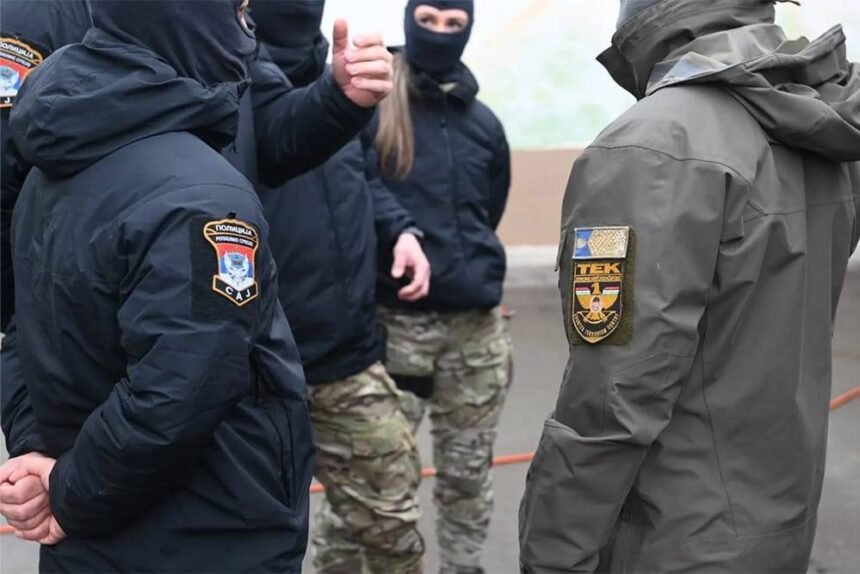
In an incisive policy analysis published today, April 30, 2026, security analyst Drizan Shala warns that the Hungarian TEK (Counter-Terrorism Centre) liaison office in Zalužani is far more than a bilateral quirk between Budapest and Republika Srpska (RS). Instead, it represents a “replicable security architecture” that threatens to bypass state-level sovereignty across the Western Balkans.
Shala argues that the decision by the incoming Hungarian government to either maintain or shutter this office in May 2026 will serve as a regional inflection point, determining whether this “sub-state security insertion” becomes the new baseline for foreign interference.
Anatomy of the Template
The “Zalužani Template” is defined by four operational pillars that allow foreign powers to project security influence while bypassing national capitals:
- Sub-State Signatories: Agreements are signed directly with entity-level ministries (e.g., the RS Ministry of Internal Affairs) rather than state-level ministries (Sarajevo’s Ministry of Security).
- Lack of State Ratification: These arrangements exist in an institutional “grey zone,” never submitted to national parliaments or notified to state-level security agencies.
- Strategic Cover Language: Operations are framed as “counter-terrorism training” or “police liaison,” despite having the documented function of protecting local leadership during constitutional crises.
- Protective Function: The office acts as a “paramilitary forward presence,” providing political insulation for leaders like Milorad Dodik against host-state legal actions.
The Kosovo Application: A “Zubin Potok” Office?
The most immediate and dangerous application of this template, according to Shala, lies in Northern Kosovo.
If the Zalužani model stands, it creates an EU-established precedent for the Association of Serbian-Majority Municipalities (ASM)—or even a single municipality like North Mitrovica—to sign its own security cooperation agreements with Belgrade or Belgrade-aligned states.
“A liaison and training office is established in Zubin Potok… The cover language is community policing… The protective function is forward presence during enforcement operations by Pristina state institutions,” Shala writes.
For the Kurti administration, the closure of the Zalužani office is not a distant Bosnian issue; it is a critical necessity to prevent an EU-sanctioned blueprint for parallel security structures within Kosovo’s borders.
The Third-State Vector: Russia, China, and Turkey
Shala warns that if an EU member (Hungary) is permitted to maintain such an office, non-EU actors will quickly exploit the precedent:
- Russia: Could formalize its decade-long training presence in RS into a Zalužani-style office, citing the “Hungarian Model” to deflect EU criticism.
- China: Plausibly framed around “Critical Infrastructure Protection” for Belt and Road projects, deploying “economic-security liaison” personnel in RS or Northern Kosovo.
- Turkey: Might seek “reciprocal” arrangements with Bosniak-majority structures in the Federation, further consolidating the ethnic fragmentation of security.
The May Inflection Point
The incoming Hungarian government faces a steep “cost gradient” regarding timing:
- Closure within 30 days: Unwinds the template before it hardens into regional precedent.
- Closure after 60 days: Increases bilateral friction and signals institutional weakness.
- Retention: Establishes the template as the “EU-tolerated baseline,” inviting a cascade of similar offices across the Balkans by autumn 2026.
As Balkan capitals—from Sarajevo to Tirana—await the decision, Shala’s analysis makes one point clear: The Zalužani office may be local in form, but it is regional in its destructive potential.