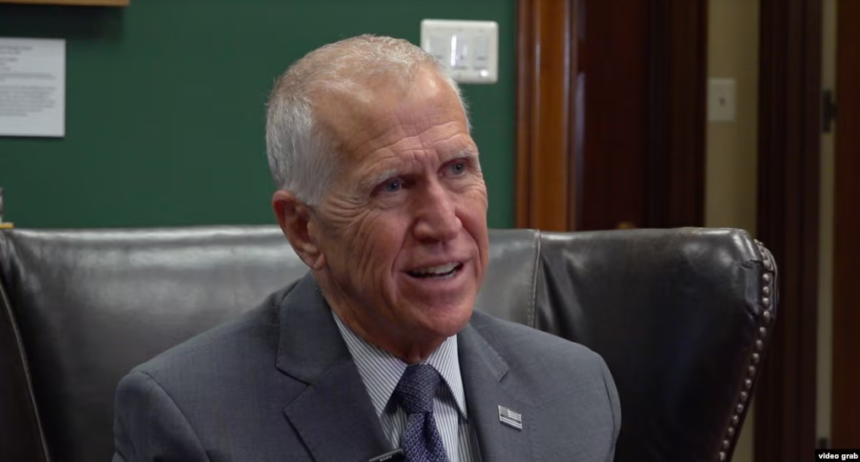
WASHINGTON, D.C. – Senator Thom Tillis, co-chair of the Senate NATO Observer Group, has issued a stark warning regarding the deepening military alliance between Russia and Iran. In a recent interview with Radio Free Europe (April 29, 2026), the North Carolina Republican argued that the conflicts in Ukraine and the Middle East are inextricably linked, forming part of a global struggle between the “democratic world” and “totalitarian regimes.”
Strategic Alliance vs. Tactical Marriage
Tillis pushed back against the notion that the Russia-Iran partnership is merely a “marriage of convenience.” He characterized it as a deep strategic military alliance that has resurrected the “Axis of Evil.”
- Iranian Support: Material aid to Russia, specifically drone technology used in the invasion of Ukraine.
- Russian Reciprocity: Russia is providing Iran with intelligence and technical data on how to target U.S. and allied assets in the Middle East.
- Shared Goal: Tillis stated that Vladimir Putin’s primary objective is to “eradicate U.S. influence” from both Europe and the Middle East.
Nuclear Alarms and Regional Stability
One of the most critical points raised by the Senator concerns Iran’s nuclear ambitions. Citing intelligence assessments, Tillis suggested that Tehran is dangerously close to achieving weapons-grade uranium enrichment.
- Timeline: Iran is estimated to be “months, if not weeks” away from having the capacity for full-scale enrichment.
- Impact: A nuclear-armed Iran would destabilize the region to levels “never seen before,” a scenario Tillis believes Moscow would exploit to further weaken Western influence.
- Direct Accountability: Tillis made a pointed accusation regarding the loss of American lives, stating, “The blood of American soldiers is on Vladimir Putin’s hands,” linking Russian support for Iranian-backed proxies to the deaths of U.S. service members.
The “Democratic Bulwark” and Long-term Strategy
Tillis remains one of the most vocal Republican supporters of NATO and continued aid to Ukraine. He outlined several key pillars for a successful Western strategy:
- Defining Victory: He warned that a “frozen conflict” or a draw in Ukraine would be a victory for Putin. “A draw is his victory; he must lose clearly,” Tillis insisted.
- Effective Sanctions: He criticized the current sanctions regime as losing effectiveness due to a lack of coordination, noting that some European allies have let economic interests delay decisive action.
- NATO Burden Sharing: While praising allies for increasing defense spending (with many moving toward a 5% GDP target), he noted that historical underspending has left a “two-trillion-dollar” gap in collective security capabilities.
- Institutional Stability: Tillis called for long-term agreements regarding Ukraine and Iran that are ratified by the U.S. Congress to ensure policy continuity regardless of which administration is in the White House.
Conclusion
For Senator Tillis, the stakes in 2026 extend far beyond the borders of any single nation. He views the current geopolitical climate as a historical tipping point where the failure to decisively defeat Russian aggression in Ukraine or halt Iranian nuclear progress would have “profound effects” on American security and the global democratic order.