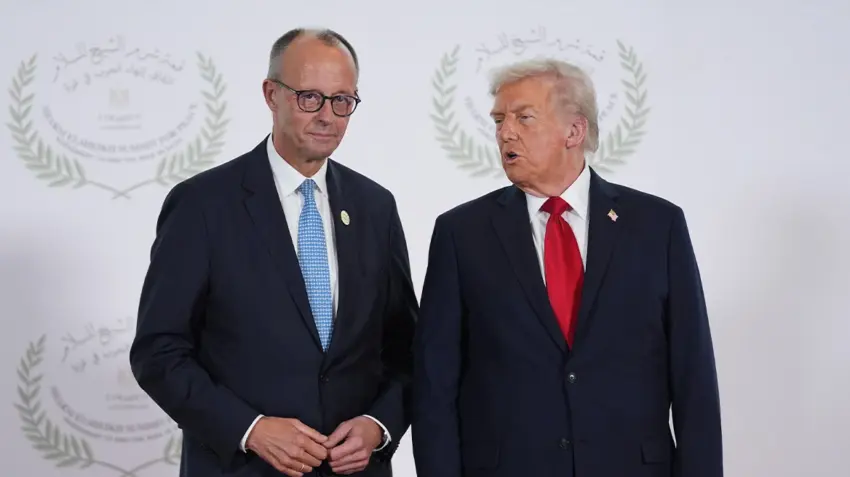
Relations between German Chancellor Friedrich Merz and U.S. President Donald Trump have taken a sharp turn for the worse, sparking a “red alert” across German political circles. In a post on his Truth Social platform, President Trump threatened to significantly reduce the number of American troops stationed in Germany, stating that a decision would be made “very soon.”
The rift marks a dramatic shift from the relatively stable relationship the two leaders had cultivated since Merz’s visit to the White House in March 2026.
The Catalyst: Criticism of the Iran Offensive
The latest fallout was triggered by Chancellor Merz’s public skepticism regarding the ongoing U.S. military operations against Iran. During a discussion with students in Marsberg, Merz accused the Trump administration of entering the conflict “clearly without any exit strategy,” adding that the U.S. was being “humiliated” by clever Iranian negotiation tactics.
Trump’s Response: The U.S. President fired back on Tuesday, questioning Merz’s competence and economic leadership.
“He has no idea what he is talking about!” Trump wrote. “It’s no wonder Germany is doing so poorly, economically and otherwise.”
Trump further accused the Chancellor of being willing to accept a nuclear-armed Iran, an allegation that German officials have dismissed as baseless and inconsistent with Merz’s actual policy positions.
U.S. Troop Presence: A Strategic Lever
The threat to withdraw troops is a familiar tactic from Trump’s first term, though the current numbers are significantly higher due to the 2026 regional security climate.
Current Deployment Figures (April 2026):
- Total U.S. Troops in Europe: Approximately 86,000
- Stationed in Germany: Approximately 39,000
In 2020, Trump attempted to withdraw 12,000 troops as “punishment” for Germany’s defense spending levels, a move later halted by Joe Biden. However, with Merz now questioning U.S. military strategy in the Middle East, Trump appears ready to revive the withdrawal plans as a form of geopolitical leverage.
Merz Attempts to Calmer Waters
Despite the public lashing, Chancellor Merz has attempted to downplay the crisis to avoid a full-blown diplomatic rupture with Germany’s most important security partner.
“The personal relationship between the American President and me—at least from my perspective—remains good and unchanged,” Merz stated on Wednesday. “We continue to be in good communication with one another.”
Why This Matters for Germany
German analysts, including those from Deutsche Welle (DW), suggest that this public spat is more than just a clash of personalities. It highlights a fundamental strategic divergence:
- German Concerns: Merz is under domestic pressure to ensure Germany isn’t dragged into a protracted, leaderless war in the Middle East.
- U.S. Expectations: Trump expects total loyalty from NATO allies, particularly regarding his “Maximum Pressure” campaign against Tehran.
The Economic Factor: Trump’s comments about Germany “doing poorly” economically hit a sensitive nerve. Germany is currently struggling with high energy costs and a sluggish manufacturing sector, making the threat of U.S. troop withdrawals—which provide significant local economic support to German regions—even more impactful.
Timeline of Friction
- March 3, 2026: Merz and Trump meet in the Oval Office; relations appear cordial.
- Mid-April 2026: Merz begins criticizing the lack of a “strategy” in the Iran conflict.
- April 28, 2026: Trump attacks Merz on Truth Social, calling him clueless.
- May 1, 2026: Trump reaffirms that a decision on troop reductions is “imminent.”