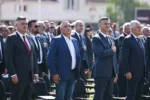
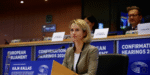
Serbian Parliament Speaker Ana Brnabić has accused European Parliament rapporteur for Serbia Tonino Picula of glorifying a “war crime” by participating in commemorations of Croatia’s Operation Storm, once again placing the events of the 1990s at the center of a politically charged dispute between Belgrade and Zagreb.
Brnabić described Operation Storm as an act of “ethnic cleansing” against Serbs and cited the displacement and deaths of Serbian civilians during and after the operation. She also highlighted the case of Nevenka Dobrić, whose 12-year-old son Siniša was killed during the refugee exodus, accusing Croatian soldiers of shooting the boy 12 times.
“Picula is once again celebrating a war crime and the ethnic cleansing of the Serbian people from Croatia,” Brnabić said, arguing that Serbian victims had never received adequate justice.
Her remarks, however, also reflect a broader and long-standing pattern in the Serbian government’s treatment of the region’s wartime history: the language of “ethnic cleansing” is invoked forcefully when discussing crimes and displacement involving Serbs, while the same terminology and historical scrutiny are frequently rejected, minimized or politically contested when it concerns Bosniaks in Bosnia and Herzegovina or Albanians in Kosovo.
That selective approach has repeatedly drawn criticism from human rights advocates and historians who argue that the suffering of one community cannot be used to erase or relativize the suffering of another.
The issue is particularly sensitive given the political backgrounds of Brnabić and the ruling Serbian establishment. President Aleksandar Vučić and other senior figures in Serbia’s current leadership were politically active during the wars of the 1990s, and the government has frequently been accused by critics of promoting a narrative in which Serbs are primarily portrayed as victims while responsibility for atrocities committed by Serbian forces is downplayed or reframed.
The same political establishment has continued to challenge internationally established descriptions of crimes committed during the Bosnian war and the Kosovo conflict, while presenting the experiences of Serb civilians as central evidence of a broader historical persecution of the Serbian people.
This selective use of historical terminology is particularly evident around Operation Storm. Croatia commemorates the operation as a decisive military victory that restored its territorial integrity and contributed to the end of the wars in the former Yugoslavia. Serbia, meanwhile, commemorates it primarily as a mass expulsion of Serbs and a major humanitarian tragedy.
The suffering of Serbian civilians during Operation Storm deserves recognition and accountability where crimes were committed. But recognition of those victims does not require ignoring the victims of other conflicts or denying the crimes and forced displacement suffered by Bosniaks and Kosovo Albanians.
Brnabić’s criticism of Picula therefore comes amid a much wider unresolved dispute over how the wars of the 1990s are remembered across the Balkans—and over whether historical suffering is being treated as a universal human tragedy or selectively mobilized for contemporary political purposes.
More than three decades after the conflicts, the competing narratives remain deeply entrenched. For Serbia’s political leadership, the commemoration of Serbian victims remains a central element of national politics. Critics argue that genuine regional reconciliation requires applying the same standards to every victim, regardless of ethnicity, and confronting crimes committed by all sides rather than using selective remembrance to reinforce competing nationalist narratives.