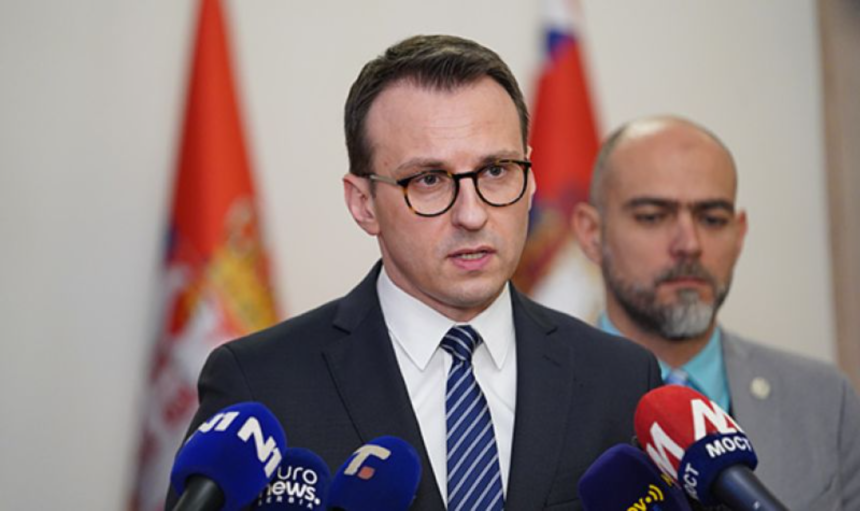
Serbia’s Director of the Office for Kosovo, Petar Petković, has launched another attack on Kosova’s institutions after several senior members of Srpska Lista were summoned for questioning as defendants, portraying the legal proceedings as a “new attack” on Kosovo Serbs.
Petković accused Prime Minister Albin Kurti of seeking to weaken the political representation of Kosovo Serbs, claiming that the summonses were part of an effort to “break the Serbs” and remove their “legitimate representatives.”
However, Petković’s statements represent a political characterization of an ongoing legal process rather than evidence that the proceedings are politically motivated. The individuals involved, like all citizens of Kosova, are subject to the country’s legal institutions, regardless of their political affiliation or ethnicity.
Srpska Lista announced that Igor Simić, Ivan Zaporožac, Ivan Todosijević, Zoran Todić and Vasilije Tomašević had been summoned by the Basic Prosecutor’s Office in North Mitrovica to provide statements as defendants on August 13.
According to Srpska Lista, the proceedings concern allegations of document forgery and date back to actions taken by Kosova authorities against Serbian-supported institutions in northern Kosova. The party claims that its officials are being prosecuted because they previously headed institutions that Prishtina does not recognize.
Those allegations remain subject to the judicial process, and being summoned as a defendant does not constitute a finding of guilt.
Petković’s intervention is also part of a broader pattern in which senior Serbian officials routinely portray legal, administrative and security measures taken by Kosova institutions as attacks on the entire Serb community. Critics argue that such rhetoric deliberately blurs the distinction between individual political actors, Serbian-supported institutions and the wider Serb population living in Kosova.
This framing can also undermine public confidence in Kosova’s rule of law by suggesting that members of the Serb community cannot be investigated or prosecuted without it automatically constituting persecution. Yet Kosovo Serbs are citizens of Kosova and, like all other citizens, are subject to its laws and judicial institutions.
Petković has repeatedly used similar language when discussing developments in northern Kosova, presenting disputes over institutions, policing and legal proceedings as evidence of an alleged campaign against Serbs. Critics say this type of propaganda is widely used by Belgrade to deepen ethnic divisions and portray ordinary institutional disputes as an existential confrontation between communities.
Such rhetoric is particularly sensitive in a region where political leaders on both sides have repeatedly been accused of exploiting ethnic grievances for political purposes. Statements portraying every legal or administrative action as an attack on an entire ethnic group risk further inflaming tensions and making political compromise more difficult.
The latest dispute therefore extends beyond the individual summonses. It once again highlights the competing narratives between Prishtina and Belgrade, with Kosova insisting on the authority of its institutions and Serbia continuing to challenge their legitimacy when they act against Serbian political structures.
Ultimately, the allegations against the five Srpska Lista officials should be determined through due process and evidence rather than political declarations from either Prishtina or Belgrade. Respect for the rule of law requires that members of the Serb community enjoy the same rights and protections as every other citizen of Kosova—and that they are equally accountable under the law.