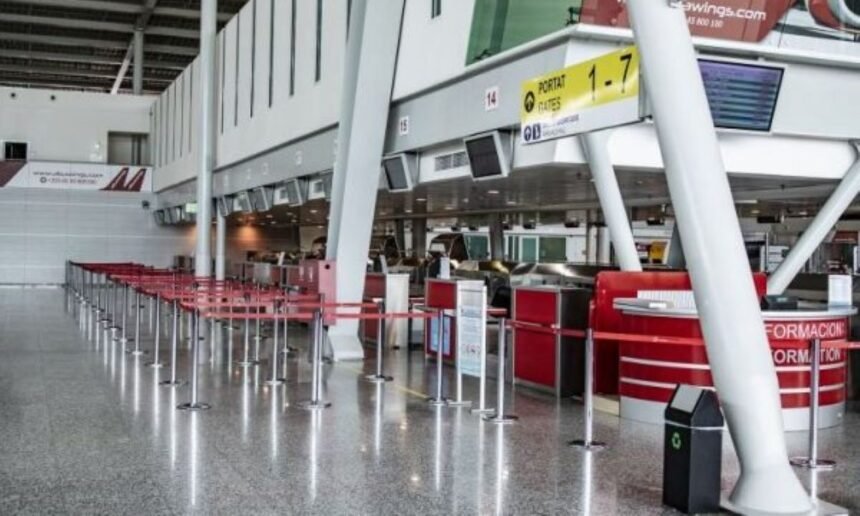
Albania’s Special Structure Against Corruption and Organized Crime (SPAK) has completed its investigation and filed formal charges against a Russian national for threatening a terrorist attack at Tirana International Airport (Rinas).
The defendant, identified as Vladislav Urban, 44, is accused of “intimidation for the purpose of committing terrorist acts.” The case has been forwarded to the Special Court (GJKKO) for trial.
The “Kosovo as Serbia” Ultimatum
The investigation revealed that in February 2023, Urban sent a threatening email to the Operational Chief of Rinas Airport. The email contained a series of high-stakes demands and claims:
- The Threat: Urban threatened to detonate a bomb at the airport.
- The Political Demand: He explicitly stated that the explosion would only be avoided if the Albanian government officially recognized Kosovo as part of Serbia.
- Hostage Claims: Urban also claimed to have taken two Albanian citizens hostage to further pressure the authorities.
Investigation and Previous Record
SPAK, in collaboration with international partners, tracked the digital footprint of the email to Urban, who was residing in Thessaloniki, Greece.
- Greek Cooperation: Following a swap of information with Greek authorities, it was confirmed that Urban’s claims about hostages were entirely fabricated.
- Psychological/Criminal Profile: Investigations revealed that the 44-year-old had a prior history of sending similar threatening emails, suggesting a pattern of using electronic communication to cause public alarm.
- Jurisdiction: Because the threat targeted a critical national infrastructure point (Rinas Airport) and had political motivations aimed at coercing the state, the case falls under the jurisdiction of SPAK’s counter-terrorism mandate.
Geopolitical Context
The incident is being viewed by security analysts as a targeted attempt to exploit the sensitive historical and political relationship between Albania, Kosovo, and Serbia.
By demanding that Albania reverse its recognition of Kosovo—a cornerstone of Albanian foreign policy—the perpetrator aimed to use terror tactics to influence geopolitical stances. This case adds to the growing concerns of the “Friends of the Western Balkans” regarding external actors attempting to destabilize the region through hybrid threats and “lone wolf” cyber-intimidation.